PLASTIC SURGERY
MEDICAL COLUMN
Questions Answered Directly by the Doctor Before You Decide on Surgery
Body
Articles
Upper Arm Liposuction: Is Removing Fat Enough to Make Your Arms Slimmer?
If the skin retains elasticity, it may contract as fat is removed. However, if the skin is already significantly stretched, wrinkled skin may remain after liposuction.
Medically reviewed by Dr. Hyungwoo Yim, Medical Director (Board-Certified Plastic Surgeon) · Published November 1, 2026 · Last reviewed November 11, 2026
SHORT ANSWER
First, the Short Answer
- If the skin retains elasticity, it may contract as fat is removed. However, if the skin is already significantly stretched, wrinkled skin may remain after liposuction.
- That is why arm liposuction assessment begins with the balance between fat and skin, rather than simply how much fat is present. Removing more fat does not necessarily produce a better result, and this is not a weight-loss treatment.
- At VITAL Plastic Surgery, we gently pinch the skin to assess its elasticity and laxity, then evaluate the thickness of the superficial and deep fat layers, differences between the arms, planned weight changes, and your health before deciding on the treatment area.
“Will my skin sag more after the fat in my upper arms is removed?”
This is a paraphrase of a question we often hear during consultations.
To answer this question, we first need to distinguish where your current concern comes from. We will explain each point below, then return to the original question at the end.
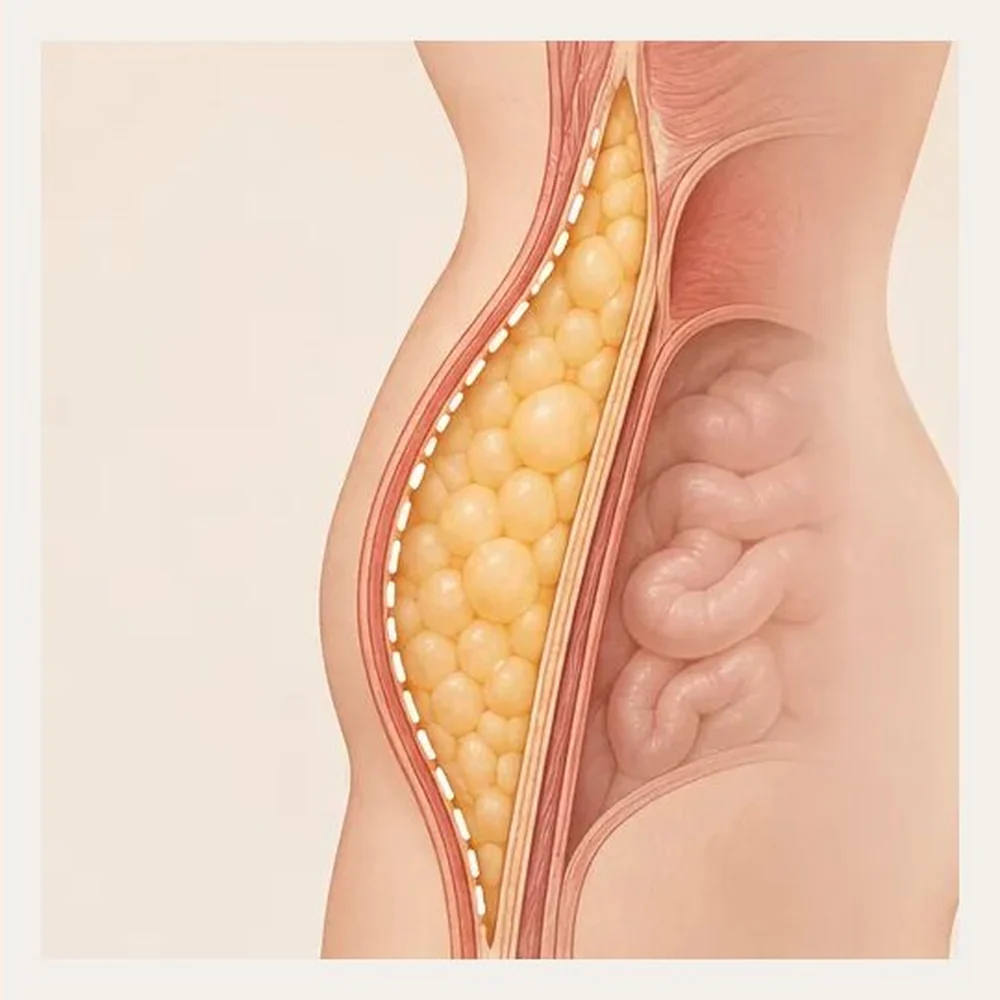
01When is arm liposuction appropriate?
Answer It is appropriate when your weight is stable but prominent subcutaneous fat remains in your arms, and your skin has the capacity to contract after liposuction.
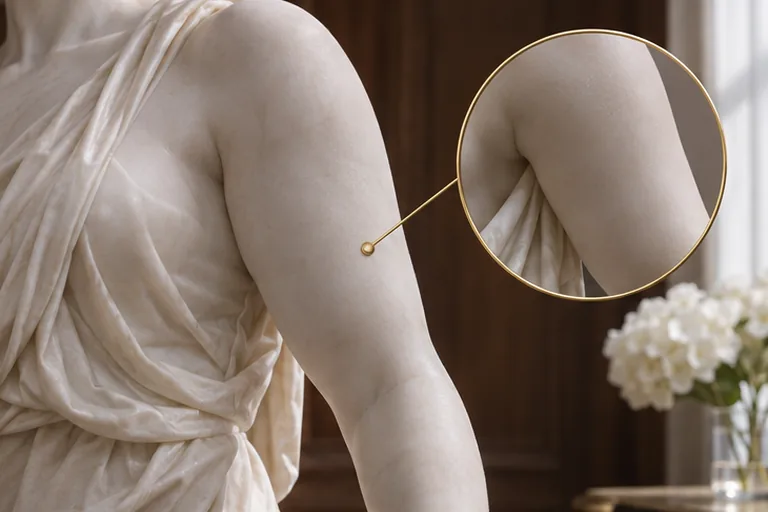
Liposuction is surgery that contours the body by using a thin tube to remove localized excess fat beneath the skin. VITAL Plastic Surgery treats the double chin, arms, accessory breast tissue, bra line, flanks, abdomen, back, and thighs. The arms are among the areas people notice most when getting dressed, so they are a frequent topic of consultation.
Liposuction is not a weight-loss treatment. We first determine whether weight loss should come first or localized contouring is appropriate. If arm size is related to overall body weight, we exclude from the surgical plan what can be reduced through diet and exercise.
Suitable candidates include people whose weight is stable but whose arm fat persists, those who want to improve balance between the arms, and those who retain enough skin elasticity for the skin to contract after liposuction. In contrast, we do not recommend proceeding directly with liposuction when substantial weight loss is the main goal or when significant skin laxity makes contour improvement with liposuction alone unlikely.
When getting dressed, many people are also concerned about accessory breast tissue (the bulge at the front of the armpit) or the bra line. Because these areas appear continuous with the arms, the consultation includes deciding whether to assess them together and how much to treat in one procedure.
Fat is not the only reason arms look large. Muscular arms may not become much smaller after fat removal, while arms with little fat and loose skin have little that liposuction can reduce. We therefore assess the thickness of the fat that can be pinched, skin laxity, and the contour around the arm, then explain how much change liposuction may achieve.
- When your weight is stable but arm fat persists
- When arm fat, accessory breast tissue, or bra-line fat bothers you when getting dressed
- When you want to improve the balance between your left and right sides
- When the skin retains enough elasticity to contract after liposuction
In Simple Terms Arm liposuction is similar to removing some filling from a tightly padded jacket sleeve. If the sleeve fabric is stretchy, it contracts as the filling is removed, making the sleeve slimmer. But if the fabric is already stretched out, it remains loose and wrinkled even after the filling is removed. Removing too much filling from just one side can also leave that side hollow and distort the sleeve's shape. That is why we first consider how much the fabric can contract and whether the filling can be reduced evenly around the sleeve, rather than simply how much filling is present.
Then isn't removing fat enough to slim the arms?
02Isn't removing fat enough to slim the arms?
Answer Arm circumference decreases as fat is reduced, but if the skin cannot contract along with it, wrinkled skin may remain and the result may look different from what you expected.
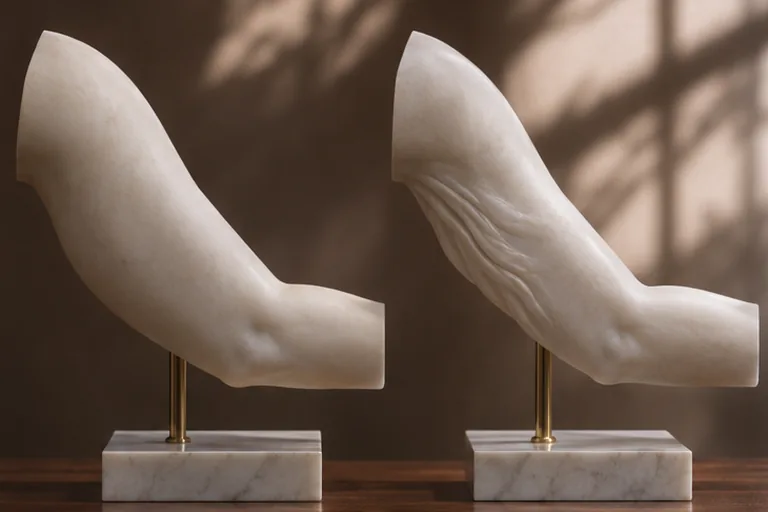
If the skin can contract after fat removal, liposuction is sufficient. However, if pregnancy or weight changes have already stretched the skin, liposuction alone may leave wrinkled skin. At VITAL Plastic Surgery, we gently pinch the skin to assess its elasticity and laxity before discussing what to expect.
Research also found that arm outcomes varied with the degree of sagging. A meta-analysis of seven studies involving 199 patients who underwent laser-assisted arm fat reduction found an average decrease in arm circumference of 2.95 cm. Both physicians and patients were generally satisfied, but satisfaction was distinctly lower among patients with more advanced sagging2. This means that a reduction in arm circumference alone does not determine satisfaction.
Because this meta-analysis examined laser-assisted techniques, its findings cannot be directly applied to conventional liposuction. Still, the influence of skin condition on results helps explain why it is assessed first during consultation, regardless of technique.
Another point to understand is how quickly arm circumference decreases. Immediately after surgery, swelling may make the arms feel larger, and the contours emerge as swelling subsides. We therefore do not judge the result by early circumference measurements alone.
Ultimately, arm liposuction results reflect both the amount of fat removed and how much the remaining skin contracts. Skin contraction varies with age, pregnancy and weight-change history, and skin texture, so removing the same amount of fat can produce different-looking results in different people. Explaining these differences before surgery is an important part of the consultation.
| Arm Condition | How it looks | What we consider first |
|---|---|---|
| More fat with good skin elasticity | A thick layer of pinchable fat and firm skin | Liposuction |
| Both fat and skin laxity | Jiggling tissue and mild wrinkling | Explain the treatment area and the skin that may remain |
| Significant skin laxity | Little fat with downward-sagging skin | Liposuction alone is unlikely to help, so it is not recommended as an immediate next step |
| High overall body weight | Larger size throughout the body, including the arms | Weight management comes first |
Then why assess the entire arm circumference instead of just the back of the arm?
03Why assess the entire arm circumference instead of just the back of the arm?
Answer Removing too much fat from the back alone can leave loose skin and disrupt the overall balance of the arm, so we assess the entire arm circumference and adjoining areas.
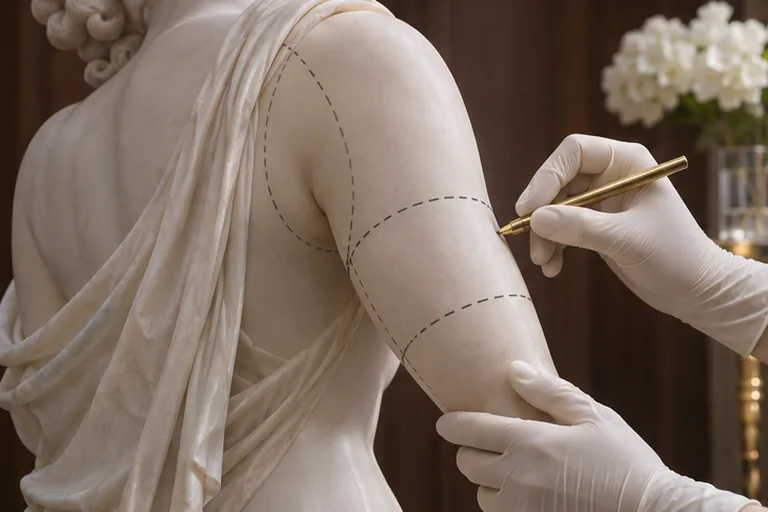
Concerns about the upper arms often begin with jiggling tissue at the back. However, removing too much fat from the back alone can loosen the skin there and create a mismatch with the front, making the arm look unnatural.
Physicians who operated on 57 women with excess arm fat in Korea reported that liposuction limited to the back outer arm could leave loose skin and disrupt contour balance. They described a technique that divides the arm into three regions—the front inner, front outer, and back outer regions—to treat the full circumference, extending to the armpit and around the shoulder blade when needed1. This was a report of one institution's experience, not a comparative study showing that the technique was better than other methods.
At VITAL Plastic Surgery, we also establish a manageable treatment area for a single operation before considering additional areas. We assess where fat is concentrated around the arm and whether the front of the armpit and bra line are also prominent, then determine how much to remove while considering skin sagging after liposuction.
Treating a larger area also increases swelling and the demands of recovery. Whether the arms, accessory breast tissue, and back are treated together or in separate procedures depends on the total amount to be removed and your health.
Small access incisions are placed in less noticeable locations. Their placement depends on the treatment area and arm shape, and we also explain that small scars may remain. After liposuction, the incisions are closed with sutures and a compression garment is applied.
So what matters more than how much fat is removed?
04What matters more than how much fat is removed?
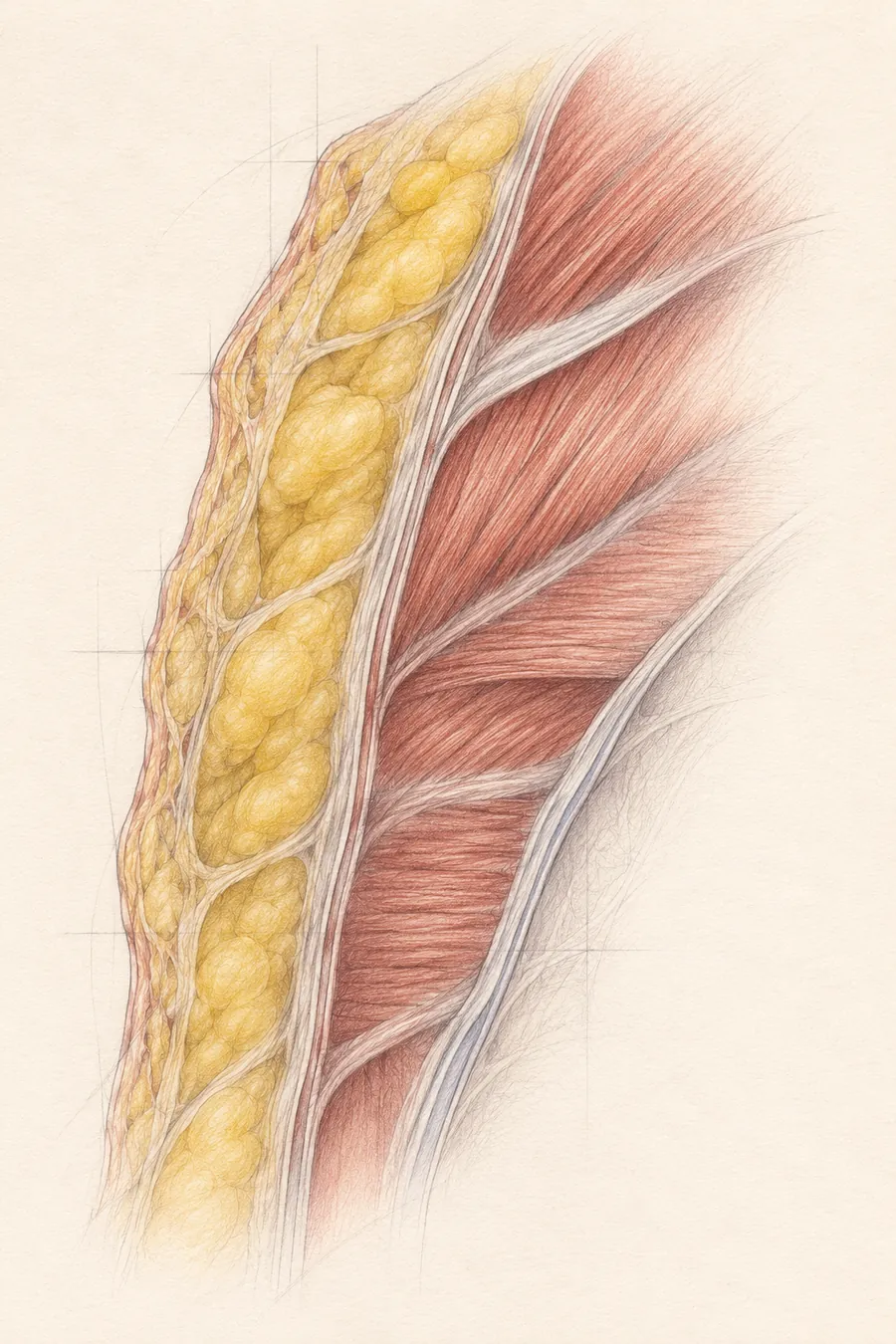
Answer Safety comes before the amount removed. Liposuction focuses on the deep fat layer, with caution around the superficial layer.
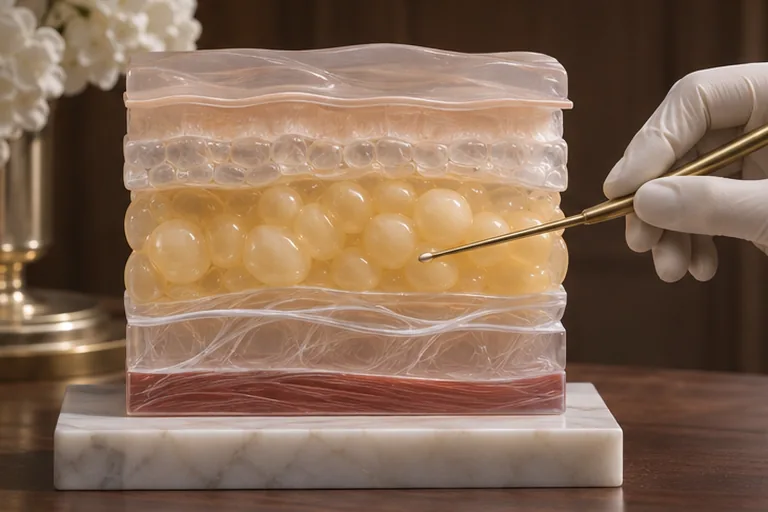
Removing more fat increases the risk of excess skin and surface irregularities. Removing a large amount over a broad area in one procedure also increases systemic risks, including bleeding, fluid shifts, and blood clots. That is why VITAL Plastic Surgery prioritizes safety over the amount removed.
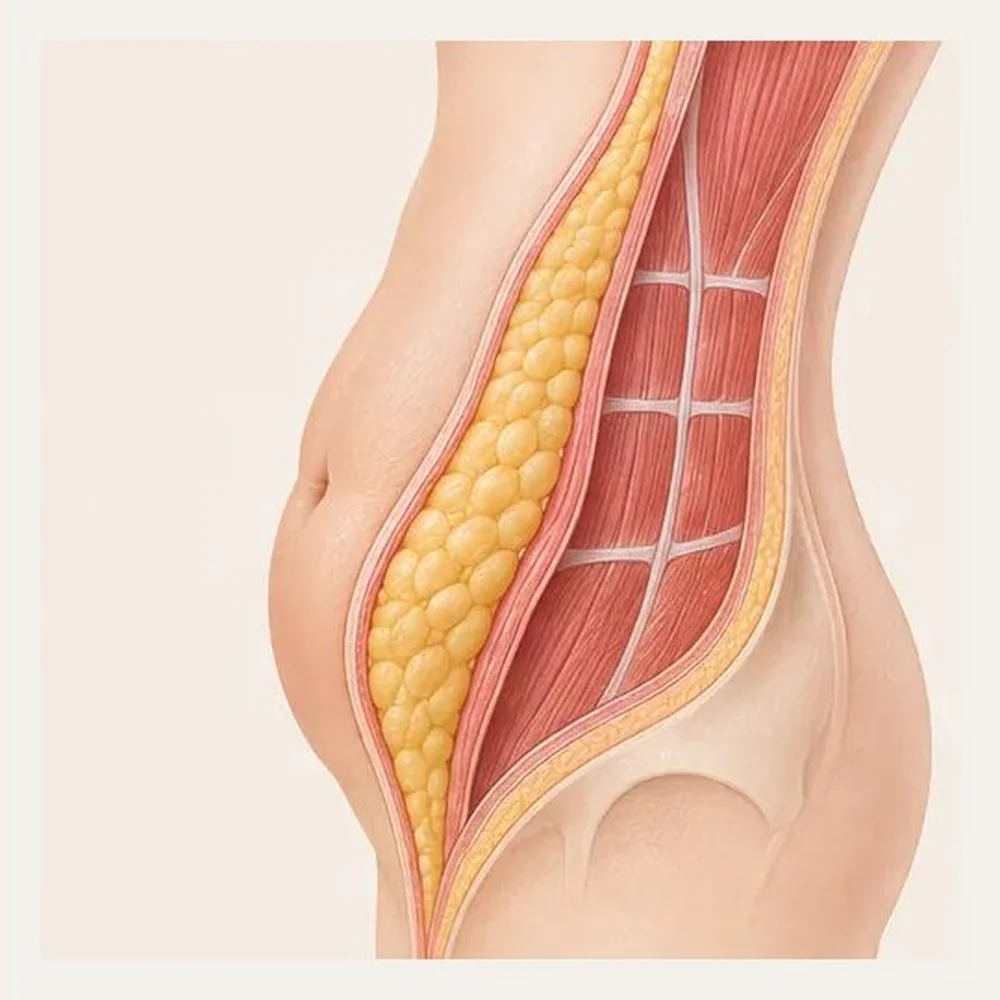
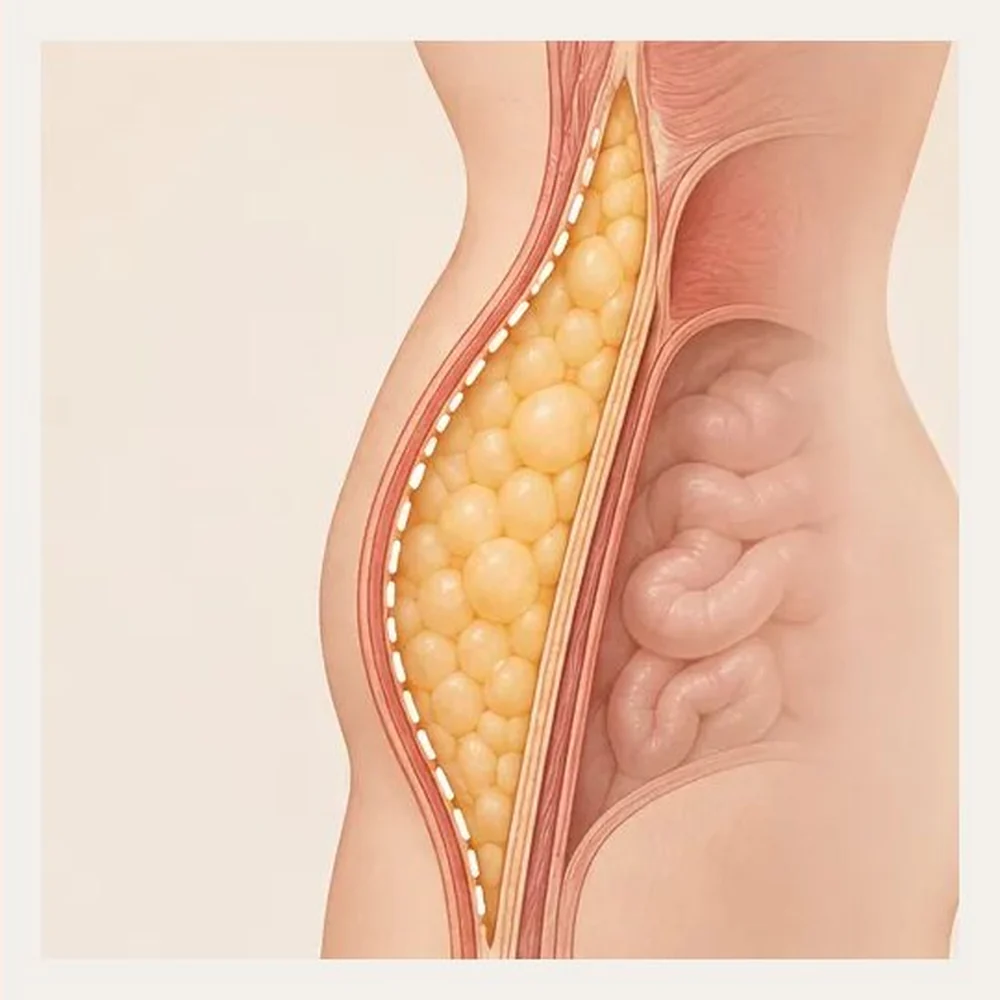
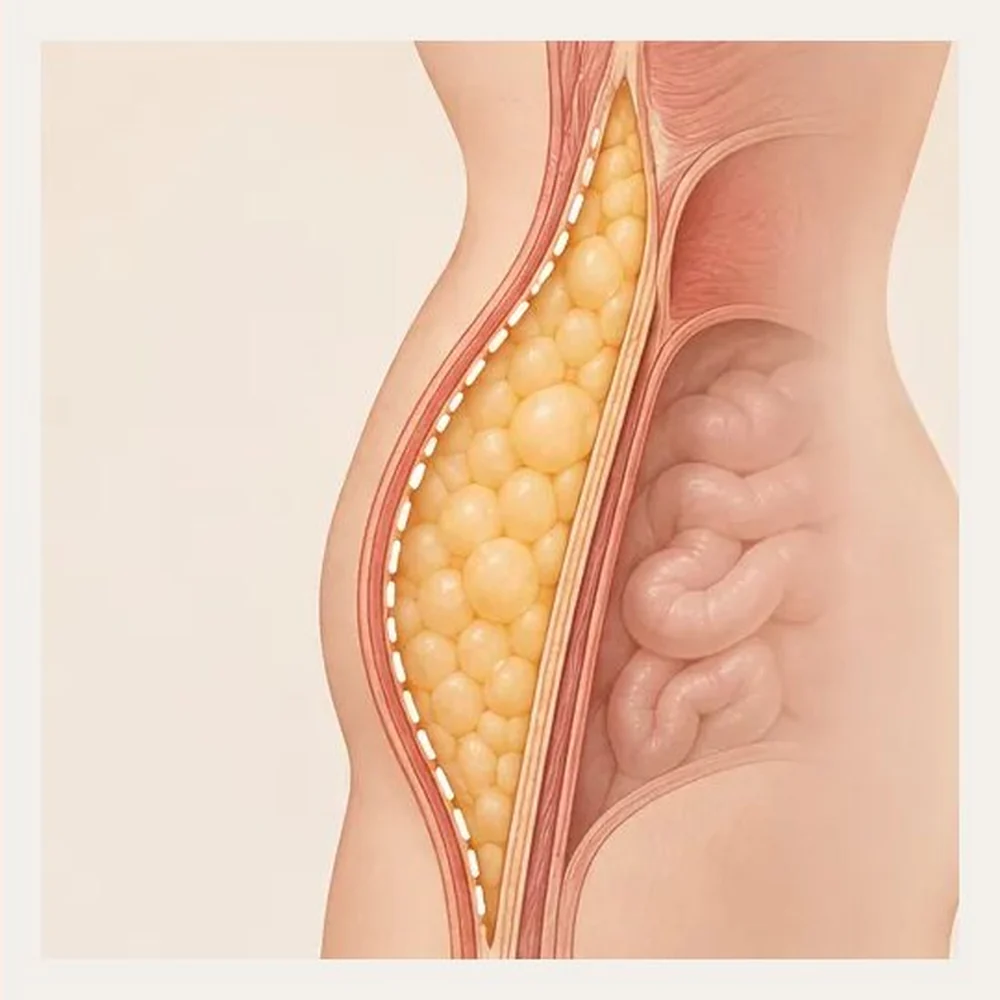
Fat beneath the skin is divided into two layers. The superficial fat layer just beneath the skin requires care because removing too much can leave an uneven surface. The deeper fat layer, closer to the muscles, is the main layer treated during liposuction. Fat is suctioned primarily from this deeper layer through small entry points, and the superficial layer and skin surface are checked by touch for evenness.
Before fat is removed, a solution containing medication (tumescent fluid) is injected into the fat layer. This helps reduce bleeding and pain and makes fat removal easier. After surgery, you will wear a compression garment that applies pressure to the treated area to reduce swelling and help the skin adjust to its new contours. Wear it 24 hours a day for the first 2 weeks after surgery, then at least 12 hours a day for the next 4–6 weeks.
Large studies have also examined the safety of liposuction. A study analyzing 31,010 liposuction cases from a U.S. cosmetic surgery complications database found a major complication rate of 0.7% when liposuction was performed alone. Hematoma, pulmonary complications, infection, and blood clots were the most common, in that order. When liposuction was combined with other surgeries, the risk of major complications was about 4.8 times higher. Risk also increased with age and body mass index4.
Will I gain fat elsewhere after liposuction?
05Will I gain fat elsewhere after liposuction?
Answer Liposuction reduces the number of fat cells in the treated area, but substantial weight gain can enlarge the remaining fat cells and increase fat in other areas.

Liposuction reduces the number of fat cells in the treated area. However, substantial weight gain after surgery can enlarge the remaining fat cells or cause fat to accumulate elsewhere, while rapid weight loss can make the skin look loose. That is why maintaining a stable weight before and after surgery is important.
A U.S. study that used photographs to measure 301 cases of liposuction or tummy tuck surgery found clear reductions in the width of the abdomen, thighs, knees, and arms. Among 46 patients followed for at least one year, no signs of fat reaccumulation were observed3. This provides evidence that the reduced contours can be maintained if weight remains stable.
However, these findings came from people whose weight did not change substantially. VITAL Plastic Surgery asks about your plans for weight changes in advance and considers both weight stability and adequate nutrition. If you are currently losing weight, reassessing when you are closer to your goal allows for a more accurate evaluation.
The arms are also an area where fat tends to accumulate with weight gain, so lifestyle habits after surgery play a major role in maintaining results. Managing your weight with your surgically reduced contours as a baseline can help maintain the changes over time.
What if I develop indentations or uneven contours after liposuction?
06What if dents or uneven contours develop after liposuction?
Answer The treated area may feel firm and uneven for the first few months after liposuction. Persistent indentations are corrected after assessing both scar tissue adhesions and remaining fat.
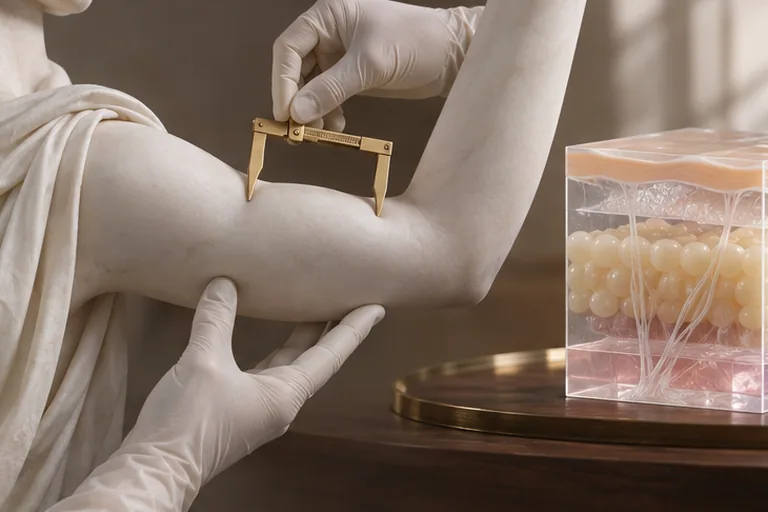
Between 3 weeks and 3 months after surgery, the treated area may become firm and feel uneven. These changes are often part of recovery, so we assess how the area changes between 3 months and 1 year, as the tissue softens.
If indentations remain after that, the indentations, scar tissue adhesions, and surrounding remaining fat are marked while you are standing. Through small nearby entry points, the adhesions are released and the surrounding fat is smoothed out. You can also have indentations or uneven contours evaluated after liposuction performed elsewhere.
Filler is sometimes used to smooth indentations. However, the amount used is 10 cc, or at most 15 cc. Any tissue needs blood vessels to grow into it to settle in stably. If a large amount forms a ball-like mass in one spot, blood vessels may not reach the center, potentially leading to inflammation and infection.
Revision surgery to correct indentations is more challenging than the initial surgery. Adhesions from previous liposuction make the tissue layers harder to distinguish, and the remaining fat is uneven. For revision surgery, we therefore assess both adhesions and remaining fat and first explain the changes you can expect and the limitations.
What does recovery look like?
07What does recovery involve?
Answer Swelling and bruising peak on days 3–4. The area becomes firm between 3 weeks and 3 months, and the contours settle over 3 months to 1 year.

Below is the typical recovery timeline provided by VITAL Plastic Surgery. Individual experiences vary. Recovery becomes more demanding as the treatment area increases or more areas are treated together.
Treating multiple areas at once increases bleeding, blood clot risk, and recovery demands, so the plan is based on the total amount to be removed and your health. If it would be too demanding, treatment is divided into separate sessions. Staging treatment is often preferable for normal recovery. Diabetes, high blood pressure, blood clot risk, and medications such as anticoagulants must be reviewed before surgery.
If you experience sudden severe pain, bleeding that will not stop, or swelling that rapidly worsens on one side, contact us immediately instead of waiting for your scheduled appointment.
A compression garment applies pressure to the treated area to reduce swelling and help the skin adapt to its new contours. We will advise you on how long to wear it based on the area and extent of treatment. If it feels too tight or causes significant tingling, please let us know instead of putting up with it on your own. Numbness or tingling often changes during recovery, but how long it lasts varies from person to person.
| Timing | What Happens | What to Keep in Mind |
|---|---|---|
| 3–4 days after surgery | When swelling and bruising are pronounced | Gentle walking, adequate nutrition and hydration |
| Early After Surgery | Check wounds, infection, and fluid buildup | Compression garment: 24 hours a day for 2 weeks, then at least 12 hours a day for 4–6 weeks |
| 3 weeks–3 months | May feel firm and uneven | Avoid judging results too soon |
| 3 months–1 year | Tissue softens and contours settle | Significant weight changes also change the shape |
08Three things we check first during your consultation
What we assess first during consultation
- Whether weight loss should come first or localized contour correction is appropriate
- Treatment area and related skin changes — skin elasticity and laxity assessed by touch
- Recovery care and limitations — treating multiple areas together or separately, health, and medications
These are general care principles. The actual decision is made after an examination.
When other care is needed first We do not recommend proceeding right away if your main goal is substantial weight loss, or if significant skin laxity makes contour improvement with liposuction alone unlikely. If your medical history includes issues that need to be checked first, such as diabetes, high blood pressure, or anticoagulant use, that evaluation comes first.
The answer to the opening question, “Will my arm skin become looser after the fat is removed?” is this: If your skin retains elasticity, it may contract to fit the reduced volume. However, if the skin is already significantly stretched, wrinkles may remain after liposuction. At VITAL Plastic Surgery, we assess the skin’s ability to contract before considering the amount of fat, then determine the treatment area based on balance around the entire arm and the demands of recovery.
— VITAL Plastic Surgery
When booking, simply leave a note saying, “Please first assess whether my arm skin can contract after liposuction,” and we will begin the consultation with that concern. You do not need to make a decision on the day of your consultation.
Related ReadingLiposuction · Body Contouring Care Guide
READ NEXT
Read Next
FAQ
Frequently Asked Questions
Is liposuction a weight-loss surgery?
No. Weight loss and localized body contouring have different goals. We first assess your health, skin laxity, and the appropriate extent of contouring.
Will I gain fat elsewhere after liposuction?
Liposuction reduces the number of fat cells in the treated area, but significant weight gain can enlarge the remaining fat cells and fat deposits elsewhere. Keeping your weight stable before and after surgery is important.
Can the arms, accessory breast tissue, and back be treated together?
Treating a larger area increases bleeding, blood clot risks, and the demands of recovery, so the decision depends on the total amount to be removed and your health. If treating both would be too much, the areas are treated in separate procedures.
Will my arm skin sag more after liposuction?
If the skin retains elasticity, it may contract to fit the reduced volume. However, if it is already significantly stretched, wrinkled skin may remain. We assess this by gently pinching the skin before surgery and discuss what to expect.
Can I travel from overseas for surgery?
There is no fixed length of stay. After assessing the treatment area and your health, we plan a schedule that includes stitch removal and the first follow-up visit.
BEFORE CONSULTATION
What to Prepare Before Your Consultation
- Weight Changes and PlansBring a record of your weight changes over the past year and your future weight-loss plans. Treatment is planned when your weight is stable.
- Areas of ConcernTell us whether your concern is limited to the backs of your arms or also includes accessory breast tissue, the bra line, and the back, based on how these areas look in clothing.
- Previous Procedures and SurgeriesIf you have had liposuction, fat-dissolving injections, radiofrequency treatments, or other procedures, tell us when you had them.
- Health conditions and medicationsTell us about any diabetes, high blood pressure, blood clot risk, and all medications you take, including anticoagulants.
- Recovery TimelineIt helps to clear your schedule with the first few days of pronounced swelling and bruising and the compression garment period in mind.
REFERENCES
References
- Hong YG, Sim HB, Lee MY, et al. Three-dimensional circumferential liposuction of the overweight or obese upper arm. Aesthetic Plastic Surgery. 2012. doi:10.1007/s00266-011-9856-z (View abstract)
- Wong ZY, Murugan V, Wong ZN, et al. Impact of Laser Lipolysis With and Without Liposuction on Arm Circumference: A Systematic Review and Meta-Analysis. Aesthetic Surgery Journal Open Forum. 2025. doi:10.1093/asjof/ojaf097 (View abstract)
- Swanson E. Photographic measurements in 301 cases of liposuction and abdominoplasty reveal fat reduction without redistribution. Plastic and Reconstructive Surgery. 2012. doi:10.1097/PRS.0b013e3182589ef7 (View abstract)
- Kaoutzanis C, Gupta V, Winocour J, et al. Cosmetic Liposuction: Preoperative Risk Factors, Major Complication Rates, and Safety of Combined Procedures. Aesthetic Surgery Journal. 2017. doi:10.1093/asj/sjw243 (View abstract)
The findings in these papers reflect the participants and conditions of each study and do not mean that every individual will have the same results.
This article provides general medical information and does not replace diagnosis or treatment. Surgical results and recovery vary by individual, and complications such as bleeding, infection, scarring, and asymmetry may occur.
More articlesVITAL Plastic Surgery Medical Articles
RESERVATION
You do not need to decide the day of your consultation.
Organize questions about this page without entering your name, contact information, or medical history. This does not submit an appointment request.