PLASTIC SURGERY
Lasting Care / Skin · Regeneration
Scar and recovery care
Laser Treatment for Surgical Scars
We assess redness, tightness, and firmness at each stage.
This may vary depending on your condition and the extent of surgery.
SHORT ANSWER
What do we check first before laser care for scars and recovery?
We assess redness, tightness, and firmness at each stage. During consultation, we check the stage of wound healing and scar maturation · signs of inflammation or infection · pigmentation tendencies and skin reactions.
01 · START WITH YOUR CONCERN
Do any of these concerns
sound familiar?
What brings you in?
1
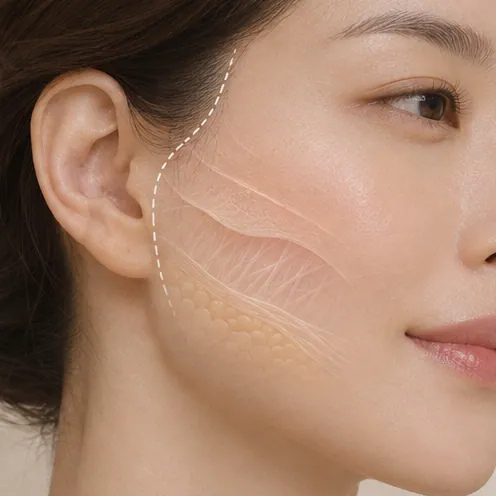
Epidermis · Skin Texture
2
Dermis · Firmness
3
Subcutaneous Fat
4
Fascial Layer (SMAS)
“My scar is red and firm.”
“I’m worried about how long the tightness will last.”
“I’d like to know when to start laser treatment.”
We assess redness, tightness, and firmness at each stage.
We assess your skin barrier, sensitivity, pigmentation tendencies, and signs of inflammation. We explain the ingredients and products, how they are applied, and their purposes.
PROCEDURE · STEP BY STEP
Laser Care for Scars · Recovery, Stage by Stage
Redness, tightness, and firmness are assessed differently depending on the stage of scar maturation.
STEP 01
Scar Location and Condition
We assess the scar’s location, redness · tightness · firmness.
STEP 02
Assessing Maturation
We check the stage of wound healing and scar maturation, along with signs of inflammation.
STEP 03
Scar Tissue
We select an approach based on the condition of the scar tissue in the dermis.
STEP 04
Start Time · Treatment Intervals
We discuss the laser, start time, and treatment intervals appropriate for each stage.
Laser Care for Scars and Recovery,
What Is This Treatment?
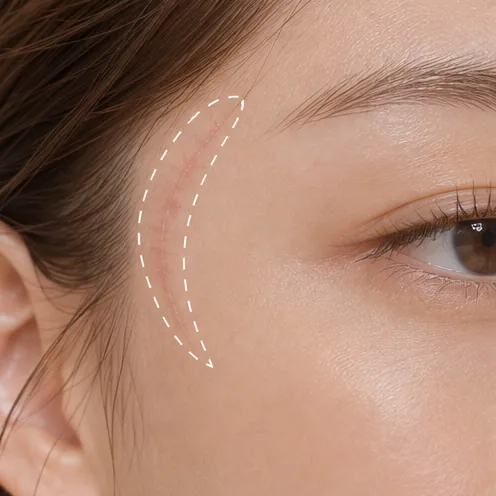
Surgical scars continue to change beneath the surface even after the wound has closed. Redness and firmness may last several months or longer. Healing progresses through an inflammatory phase lasting up to 2 weeks, a scar contraction phase from 3 weeks to 3 months, and a remodeling phase lasting a year or longer afterward. We therefore begin injections and laser care one month after surgery and continue regular care for at least 6 months. We do not use the same laser at the same time for every red scar. We first distinguish normal healing from problems that need treatment.
- Scar Contraction
- Newly formed collagen pulls together, making the tissue firm and tight. This is usually most noticeable between 3 weeks and 3 months.
- Remodeling
- During this phase, disorganized collagen becomes more orderly, the tissue softens, and redness fades. It lasts from 3 months to a year or longer.
- Raised Scars
- This term includes hypertrophic scars, which thicken within the original wound boundaries, and keloids, which grow beyond them. Early evaluation is needed.
- Silicone Products
- These products are applied to or placed over a scar after the wound has closed. We provide guidance as needed.
In Laser Care for Scars and Recovery
in Lower Blepharoplasty
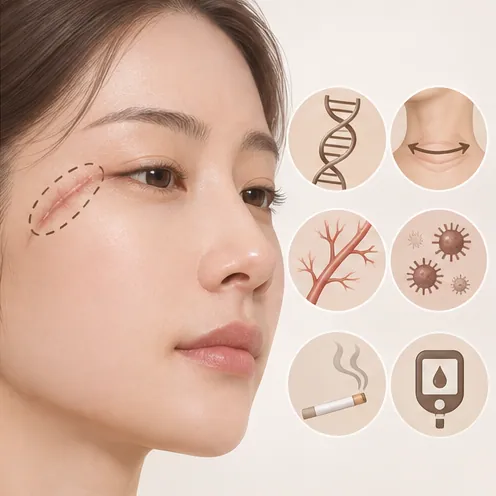
Scarring Depends on More Than Your Individual Predisposition
Scarring is influenced by individual predisposition as well as the location, tension on the wound, blood flow, infection, smoking, diabetes, and scar care. Areas that move and pull frequently are at a disadvantage, and scars become more noticeable when blood flow is poor or infection develops. Asian patients generally tend to scar more readily than Western patients, making early evaluation especially important.
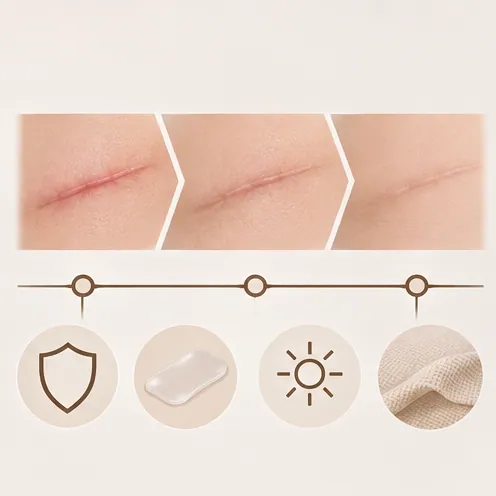
Each Stage Calls for Different Care
Early priorities are protecting the wound and checking for infection or wound separation. After the wound closes, we provide guidance on silicone products, sun protection, and reducing friction as needed. Around 1 month, we assess tightness and firmness and begin any necessary injections and laser treatment. Around 3 months, we reassess how the tissue is softening.
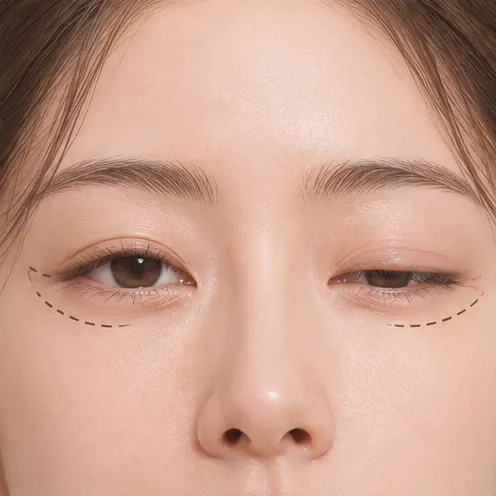
We First Explain Firmness Between 3 Weeks and 3 Months
During this period, the surgical area may feel firm and bunched up, the eyes may not close fully, or the area beneath the eyes may look slightly pulled. This occurs as tissues join during healing, and rushing into revision surgery or aggressive correction may damage the tissue. However, we do not assume every symptom is normal. We examine pain, changes in function, and signs of inflammation.
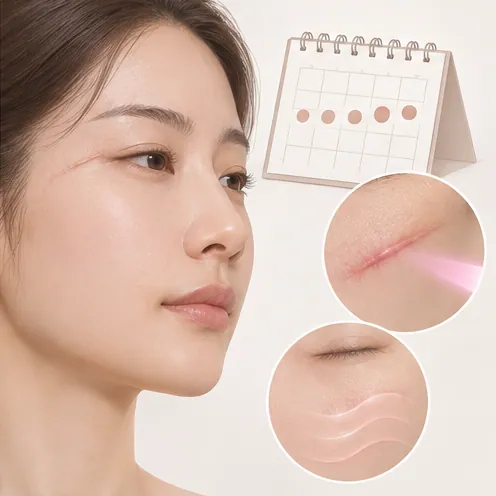
Care Begins at One Month and Continues for at Least 6 Months
We begin injections and laser care one month after surgery and continue regularly for at least 6 months. Swelling is managed separately with injections, lasers, and other treatments. A prolonged recovery can become emotionally tiring before it becomes physically tiring, so we plan in advance when and what to assess. Around 6 months, we compare follow-up photos to determine whether additional treatment is needed.
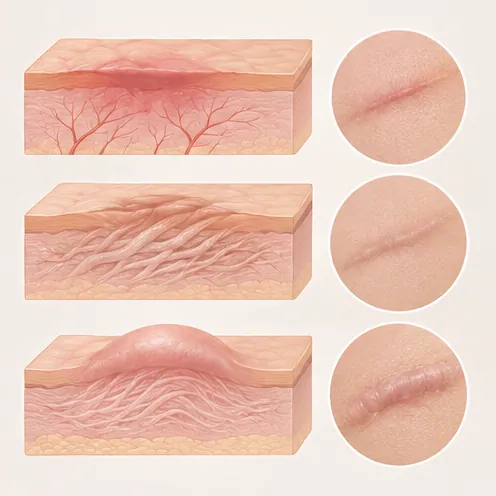
We Do Not Use the Same Laser at the Same Time for Every Scar
Scars dominated by redness, scars dominated by firmness, and raised scars require different approaches. We evaluate developing raised scars early and consider laser intensity separately when there is a tendency toward pigmentation. In some cases, injections or observation may be preferable to lasers. We therefore explain the options after assessing the scar’s stage and appearance.
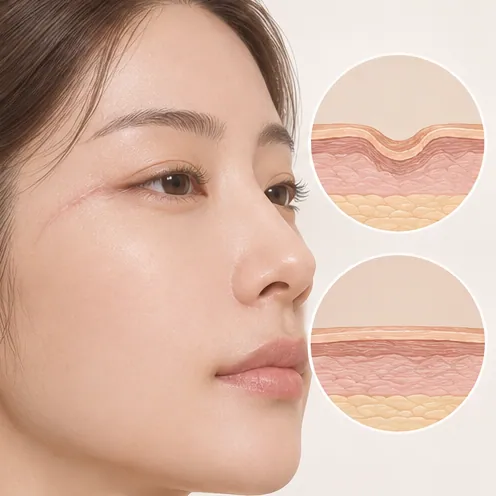
We Consider Surgical Scar Revision When Needed
For scars and unnatural lines that remain after a year, we assess the healing stage and any tissue shortage to determine whether scar care or surgical revision is appropriate. Options include procedures to reduce or remove scars. Waiting for the tissue to stabilize may be preferable for cosmetic revisions, but acute hematomas, infections, and vision changes require immediate evaluation.
Illustration for reference · Not an actual patient
A Word from the Doctor
Dr. Hyungwoo Yim’s own words from his blog and interviews.
01When Treating Scars
“Simply removing a scar is not always the answer.”
In these cases, it is important to carefully consider whether surgery could cause the scar to widen instead.
Dr. Hyungwoo Yim, Medical Director
The Surgical Process Varies
The treatment process varies
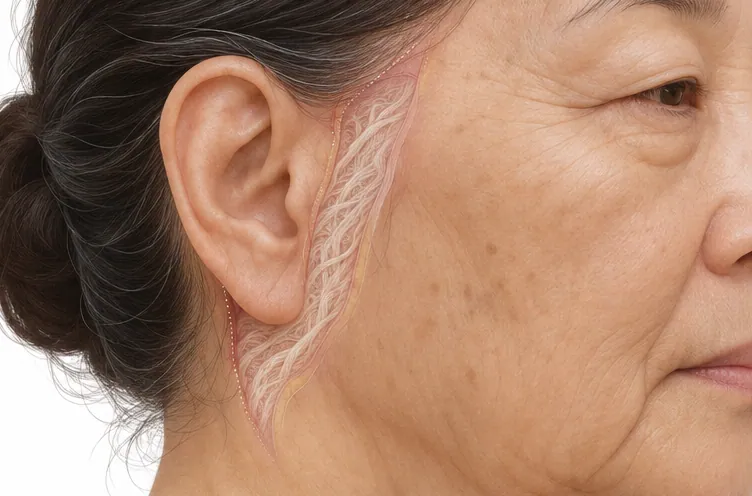
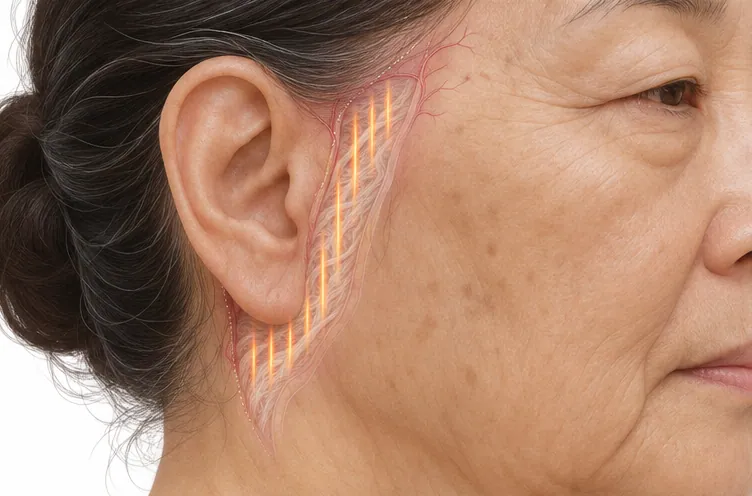
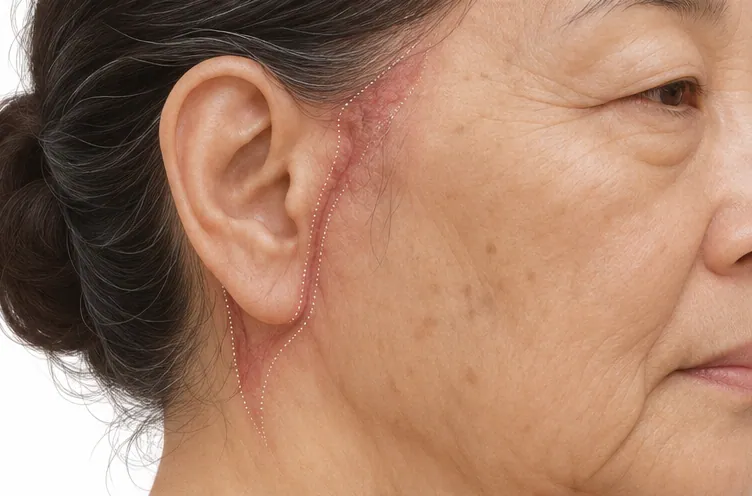
When Scars Around the Ears Are Red and Firm After a Facelift
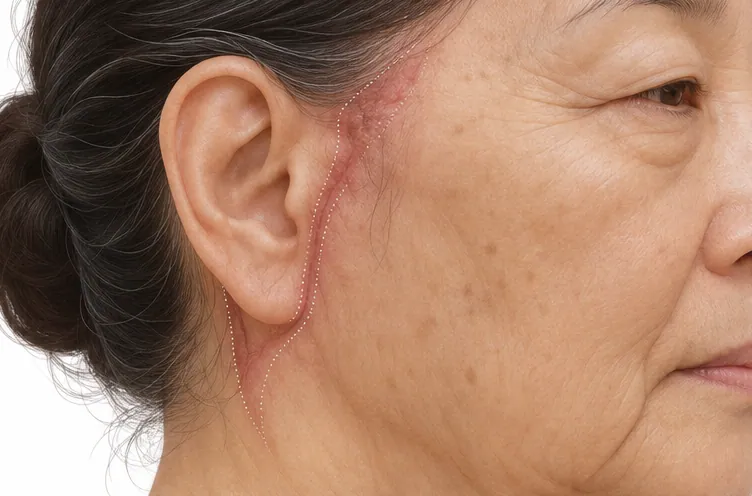 1
We examine the scar’s location, tightness, and stage of maturation
 2
Starting at one month, we determine when to begin injections and laser treatment
 3
We adjust laser depth and treatment intervals according to redness and firmness
 4
We continue silicone products and sun protection and reassess around 6 months
When the Eyelid or Under-Eye Area Feels Tight
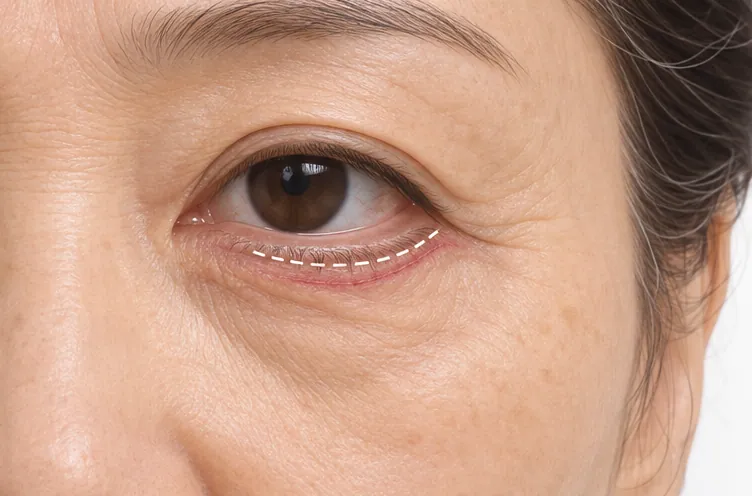 1
We first assess function by checking eye closure and eyelid position
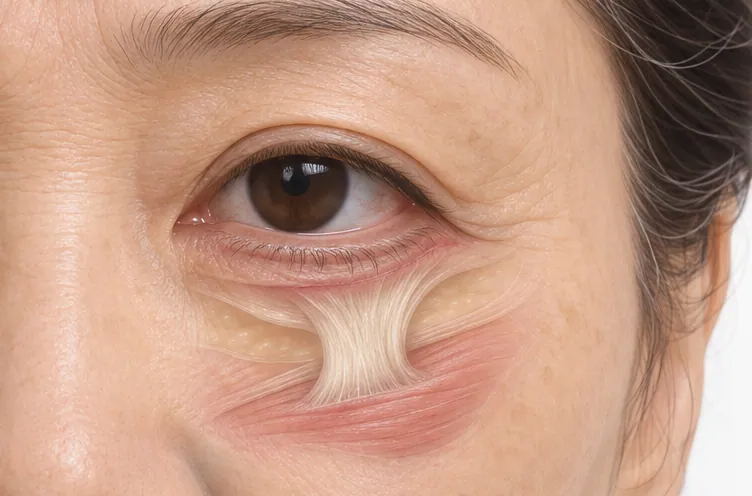 2
We assess the extent of adhesions and scar tissue by touch
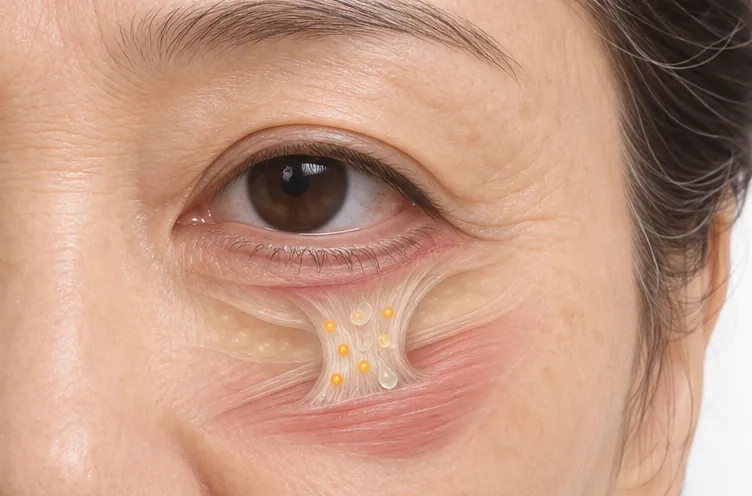 3
Starting one month after surgery, we tailor injections and laser treatment around the eyes to the area
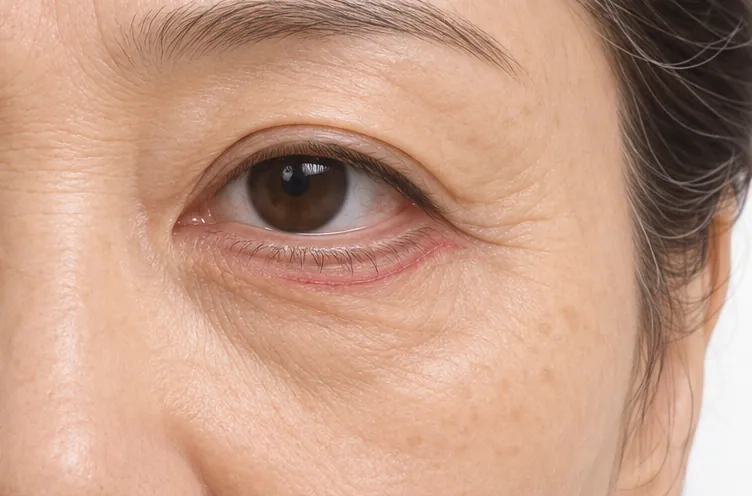 4
Persistent corneal exposure or pain calls for early surgical evaluation
When a Scar Remains After a Year
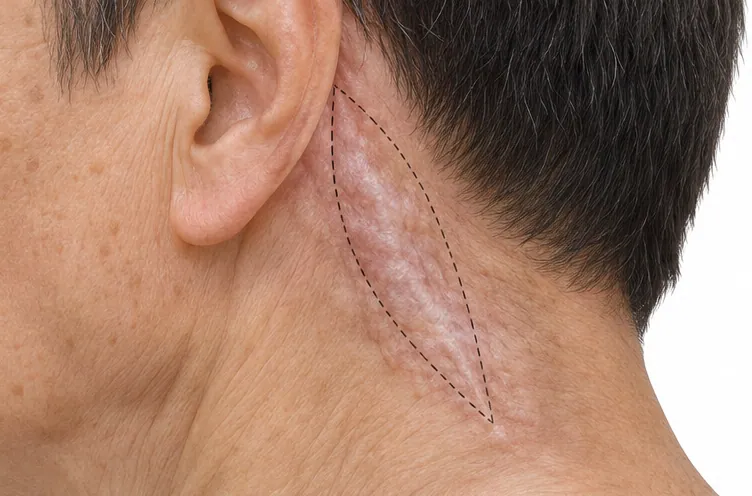 1
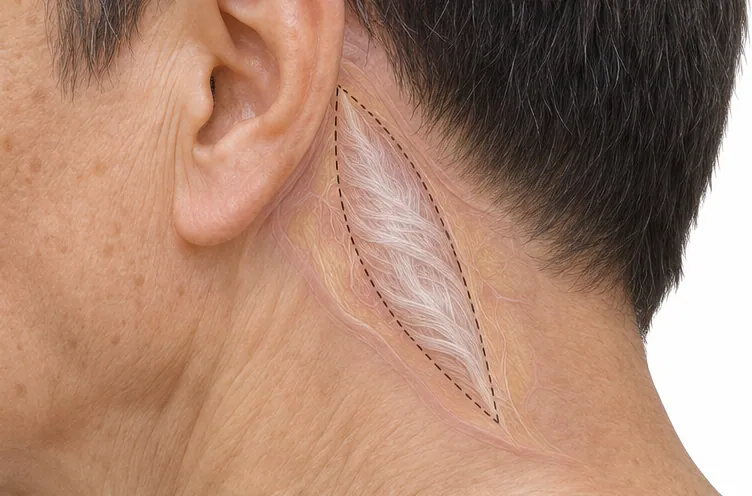
We plan the revision based on the scar’s width and direction and the available surrounding tissue
 2
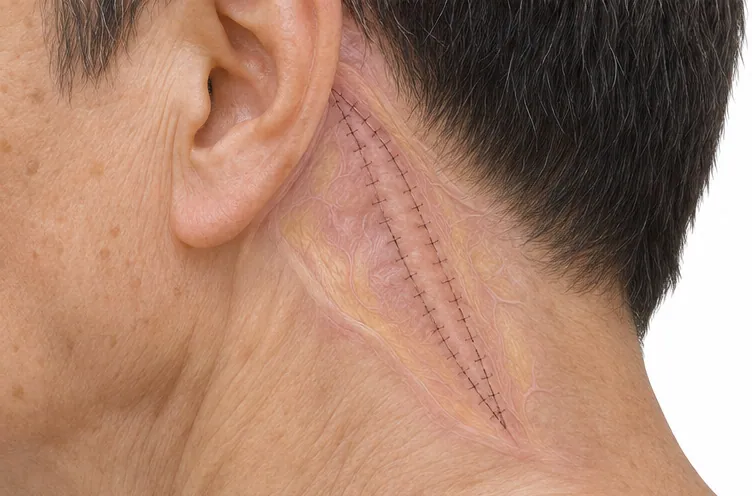
We make an incision along the scar tissue and remove as much as needed
 3
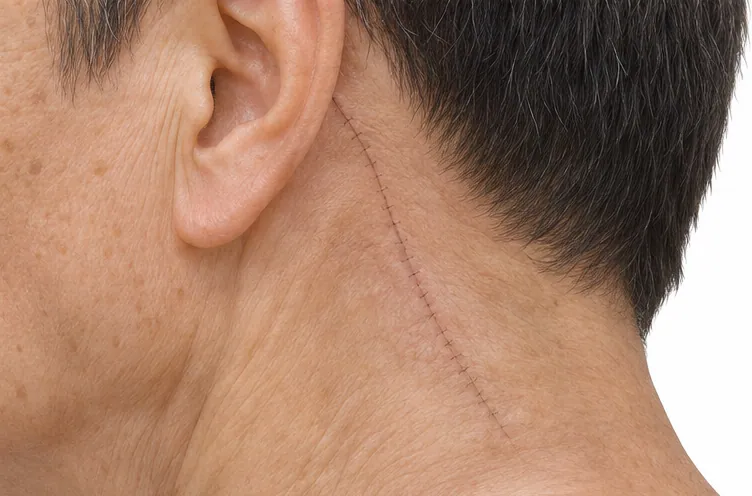
We close the wound in layers to distribute tension
 4
Starting at one month, we resume care with injections and lasers
Illustration for explanation · Not an actual patient. This is a simplified description of typical steps. The actual technique and extent of surgery are determined after examination.
02 · WHAT WE LOOK AT
Even when concerns look similar,
the factors to assess differ.
Stage of Wound Healing and Scar Maturation
We assess your skin barrier, sensitivity, pigmentation tendencies, and signs of inflammation.
Signs of Inflammation · Infection
We explain the ingredients and products, how they are applied, and their purposes.
Pigmentation Tendencies and Skin Reactions
We determine whether and when to combine treatments based on previous treatments and your recovery.
03 · DOCTOR'S DECISION
When choosing an approach, Dr. Hyungwoo Yim
looks at three things first.
Distinguishing Normal Healing From Problems That Need Treatment
Using your medical history and examination findings, we distinguish your current condition from your desired changes. At this stage, we identify the necessary conditions before choosing a treatment.
Explaining Injections · Lasers · Observation
When comparing available methods, we explain the expected changes, the burden on the tissues, recovery, and potential remaining problems.
Follow-Up Exams and Home Care Plan
We give you time to understand the explanation and ask questions. We may not recommend immediate treatment if its burden is greater or if you cannot allow enough time for recovery.
VITAL Plastic Surgery's principle is to recommend necessary treatment at the appropriate time. Having a consultation does not mean you need to decide on a procedure or surgery that day.

When
to consider a consultation
- When a surgical scar is red or firm and you want to discuss treatment timing
- When you are worried about how long tightness will last
- When a raised scar begins to develop
- When you want to assess the location and changes in scars after a facelift or breast surgery
- When you want to discuss revision of a scar that remains after a year
When
Surgery is not our first recommendation
- When the wound has not yet closed, or wound separation or infection is suspected
- When a hematoma or vision changes require immediate evaluation first
- When ongoing hyperpigmentation requires postponing laser treatment
- When cosmetic revision is being rushed before the scar has stabilized
04 · LIMITS & RISKS
Along with possible improvements,
we explain the limitations and risks.
Your desired changes — First, tell us what bothers you most and which aspects of your appearance you want to keep. We do not promise changes identical to photos or someone else's results.
Skin Irritation
Burns
Pigmentation Changes
Infection
Previous Treatments
Do not wait if you have these symptoms
If you experience skin changes resembling blisters or burns, progressively worsening pain or swelling, or signs of possible infection such as pus, contact us immediately rather than waiting for your appointment.
Conditions to address first — We first assess your health, inflammation and stage of recovery, and the range of feasible treatments. If needed, testing, observation, or other medical care may take priority.
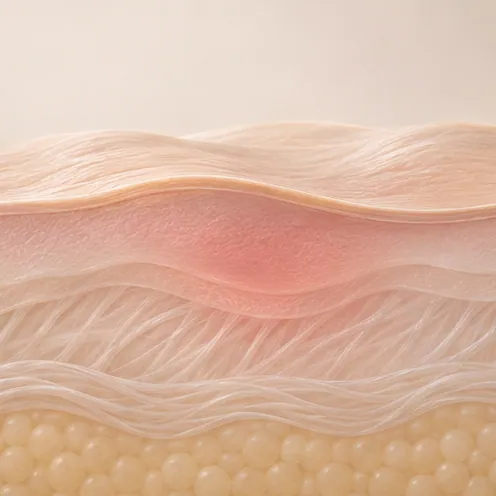
Risks and limitations to discuss during consultation — skin irritation, burns, pigmentation changes, infection, and possible worsening of scars. This is not a complete list of possible risks. Risks may vary depending on your health, previous treatments, and the treatment method and extent. These are explained in detail during the examination and consent process.
Pre-treatment assessment and
Care by Recovery Stage
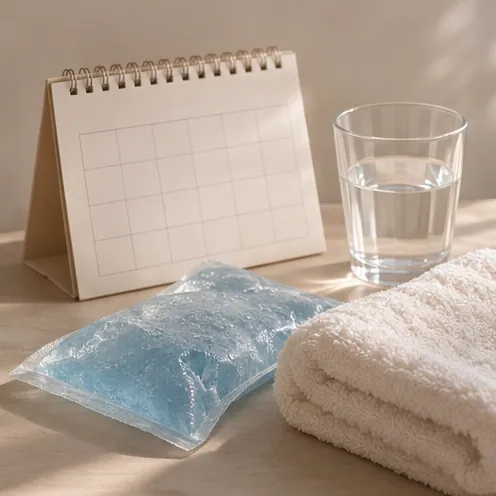 1 Week After Treatment
Swelling, bruising, and raised or uneven marks may occur at injection sites. Initial swelling should not be interpreted as a treatment effect.
 Time between sessions
A standard course is 3 sessions, spaced 3–4 weeks apart for Re2O and 1 month apart for pearl injections.
 1–2 Months
You begin to notice hydration and firmness after the swelling subsides.
 Care
Sunscreen is most important after the procedure. Continue scar care consistently for at least six months.

Medications
Please tell us about any medications and dietary supplements you take. We assess the risk of bruising and bleeding.
Previous Procedure History
Please tell us which fillers and injectable products you have received, as well as any recent laser treatments.
Skin Condition
We may not recommend Re2O if your skin is well hydrated and your pores are in good condition.
Recovery timelines are general estimates and vary by individual. Contact us immediately for sudden severe pain, decreased vision, bleeding that does not stop, or rapidly worsening swelling on one side.
05 · FOLLOW THE CHANGE
We also document
and monitor changes after treatment.
01
STEP 01
Documenting your condition before treatment
We review previous treatments, your current condition, and the changes you hope to see.
02
STEP 02
Check Early Reactions · Wound Healing
We explain treatment-specific precautions and symptoms that require contacting us.
03
STEP 03
Comparison of skin texture · firmness changes
We compare photos taken under the same conditions along with your skin condition.
04
STEP 04
Assessing additional care
We explain additional treatment based on your condition rather than recommending the same treatment to everyone.
This is a general overview, not an actual patient case. Specific follow-up schedules vary by treatment method and recovery. If you experience skin changes such as blisters or burns, worsening pain, or signs of possible infection, contact a medical facility immediately rather than waiting for your appointment.
Common questions
during consultations
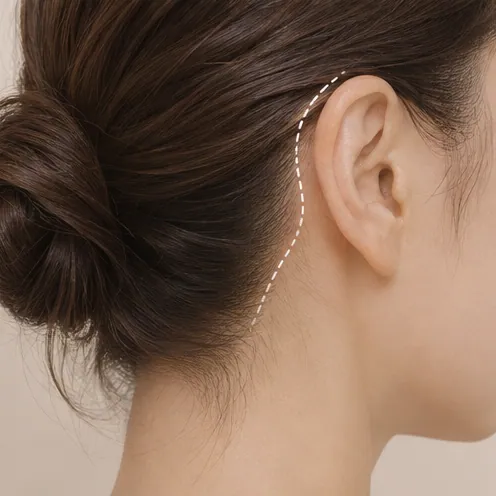
Will facelift scars show when I tie my hair up?
Incisions are placed around the temples and ears, along the rear hairline, and in other areas. They may initially be red and firm and mature over several months or longer. Scars around the ears may be visible with short hair or when the hair is tied up. You can resume tying your hair up after we check your healing and whether it pulls on the wound.
Are breast surgery scars treated the same way?
Depending on the extent of a breast lift, scars may remain around the areola, vertically down the breast, and along the breast crease. Nipple reduction tends to cause fewer scar concerns. Different locations have different tension and friction conditions, so we determine the timing and approach according to the extent of surgery.
How long should I wait?
We usually look for a turning point around 3 months and compare again around 6 months and 1 year. However, scars can continue to change for more than a year, so we do not judge by timing alone. Persistent pain or functional problems should be evaluated early without waiting.
BEFORE YOU DECIDE
Before you decide,
frequently asked questions
Questions to review together before deciding.
Based on questionnaire responses from Dr. Hyungwoo Yim · Last updated October 2026 Specific methods and their scope are discussed individually after an examination.
Q
Should I just wait if the area feels firm and tight?
−
A
These symptoms can occur during recovery, but we do not assume every symptom is normal. We examine pain, changes in function, and signs of inflammation to determine what care is needed.
Q
Are the cost, number of treatments, and recovery period fixed?
+
Q
Can a treatment plan be finalized through a photo consultation alone?
+
DOCTOR'S COLUMN DOCTOR'S COLUMN DOCTOR'S COLUMN
Must Read
Care Notes Written by the Doctor · Please Read Before Your First Visit
No.1
No.3
VIEW MORE →
Once you feel fully informed, schedule a consultation.
Laser Care for Scars and Recovery Book a Consultation
You do not need to decide the day of your consultation.