PLASTIC SURGERY
MEDICAL COLUMN
Questions Answered Directly by the Doctor Before You Decide on Surgery
Skin Tightening
Articles
Facelift Recovery Timeline: What to Expect at 1 Week, 1 Month, and 6 Months
Facelift recovery happens in stages rather than all at once. Swelling is most severe 3–4 days after surgery. Facial stitches are removed after 5–7 days and scalp stitches after 10–14 days. Return to daily activities is generally expected at about 10 days.
Medically reviewed by Dr. Hyungwoo Yim, Medical Director and Board-Certified Plastic Surgeon · Published 2026.11.24 · Last reviewed 2026.11.24
SHORT ANSWER
First, the Short Answer
- Facelift recovery happens in stages rather than all at once. Swelling is most severe 3–4 days after surgery. Facial stitches are removed after 5–7 days and scalp stitches after 10–14 days. Return to daily activities is generally expected at about 10 days.
- However, 10 days is a point at which you may return to daily life, not the end of recovery. Swelling, bruising, and differences between the two sides may remain at 1 month; firmness and tightness may occur around 3 months; and scars may continue to change for a year or longer.
- VITAL Plastic Surgery checks your progress at 1 week, 1, 3, and 6 months, and 1 year. We assess the initial changes in facial contours separately from the period when the tissues settle, and explain which changes can be monitored and which symptoms require you to contact us right away.
“After a facelift, when can I start seeing people, and when will my face settle?”
This is a paraphrase of a question we often hear during consultations.
To answer this question, we first need to distinguish where your current concern comes from. We will explain each point below, then return to the original question at the end.
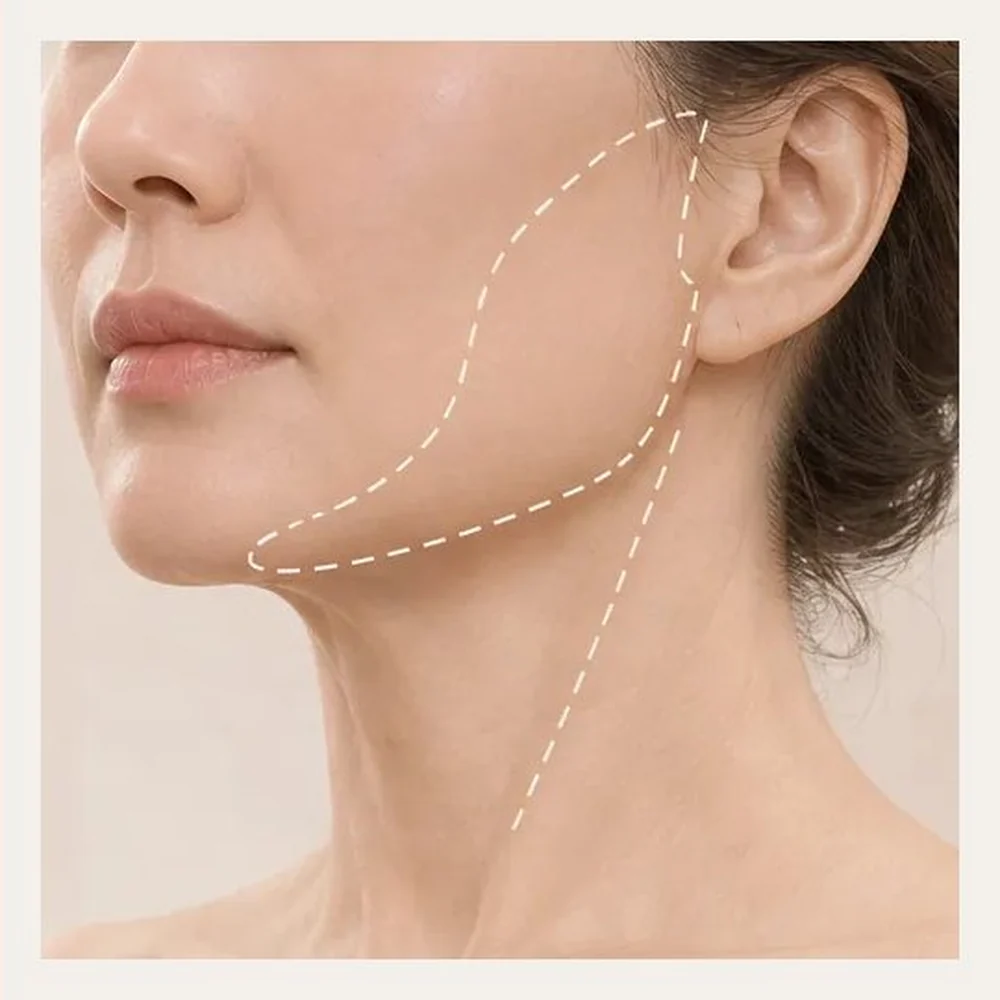
01What are the stages of facelift recovery?
Answer Swelling is at its worst on days 3–4. Stitches are removed and a return to daily activities is considered at 7–10 days. The tissues and scars then settle over several months to a year.
It can help to think of facelift recovery in stages: when the wounds close, when swelling and bruising subside, and when the tissues settle into place. A deep plane facelift at VITAL Plastic Surgery takes approximately 4–5 hours under sedation or general anesthesia and does not require an overnight stay. Recovery begins that same day.
Swelling increases over the first few days and is usually at its worst on days 3–4. Facial stitches are removed after 5–7 days and scalp stitches after 10–14 days. We generally advise allowing about 10 days before returning to daily activities. By then, most of the major swelling has subsided, making daily activities possible, but the tissues inside the face are still healing.
Over the following months, the initial changes in facial contours occur alongside the process of the tissues settling. VITAL Plastic Surgery considers these two processes separately and explains in advance that scars may initially be red and firm and can continue to change for more than a year.
The table below shows the average recovery timeline provided by VITAL Plastic Surgery. It may vary depending on the extent of surgery, your health, and whether you also had a neck lift.
| Timing | What Happens | What to Keep in Mind |
|---|---|---|
| 3–4 days after surgery | Peak Swelling | Sleep with your head slightly elevated; use compression only when instructed |
| 7–10 Days | Facial stitches removed after 5–7 days, scalp stitches after 10–14 days; return to daily activities after about 10 days | 1-week follow-up |
| 1 Month | Check swelling, bruising, and incisions; differences between the two sides may be visible | Do not judge whether recovery is normal from photos alone |
| 3 Months | Firmness and tightness may occur | Have persistent pain checked without waiting |
| 6 months–1 year | Compare photos and function at different stages; monitor tissue flexibility | Scars may continue to change for more than a year |
In Simple Terms Recovery after a facelift is similar to a newly wallpapered room. Right after the wallpaper is applied, the glue has not dried, so some areas lift and the seams are noticeable. After a few days, the larger lifted areas settle enough for the room to be used without a problem. Even so, it takes months for the glue to dry completely and the wallpaper to adhere firmly to the wall, while the seams gradually become less noticeable as the seasons pass. So, rather than immediately tearing the wallpaper off again because a seam is visible after about a month, you wait for it to dry before deciding.
What should you do during the first week after surgery?
02What is the first week after surgery like?
Answer As swelling increases over days 3–4, rest with your head slightly elevated. Around the 1-week mark, bleeding, infection, swelling, and the incisions are checked before deciding when to remove the stitches.
Immediately after surgery, you may have swelling and bruising on your face, under your chin, and around your ears. Swelling is usually at its worst on days 3 to 4, so it is recommended that you sleep with your head slightly elevated during this time. When you lie down with your head low, swelling can accumulate in your face.
Compression is not the same for everyone and should only be used when you are instructed to do so for your procedure. Avoid tightly wrapping or rubbing your face on your own. If you have questions, please ask at your follow-up appointment first.
At about 1 week, bleeding, infection, swelling, and the condition of the wounds are assessed to determine when to remove the stitches. Facial stitches are removed after 5–7 days, and scalp stitches after 10–14 days. At this point, your face may look unfamiliar in the mirror for the first time, but it is too early to judge its appearance because swelling remains.
We advise all patients to stop smoking and drinking alcohol before surgery. Because both can affect bleeding and wound healing, it is best to continue avoiding them during recovery. We also recommend stopping herbal medicines and supplements such as omega-3 when possible because they may increase the tendency to bleed.
- Sleep with your head slightly elevated for 3 to 4 days
- Use compression only as instructed for your procedure
- Continue avoiding smoking and alcohol
- Stop herbal medicines and supplements such as omega-3 until you have discussed them with your doctor
- Determine when to remove stitches at the one-week follow-up
If I can return to daily life after about 10 days, can I meet people then?
03Can I see people when I return to daily activities after about 10 days?
Answer About 10 days is a guideline for returning to daily life, and recovery varies from person to person. Since swelling and bruising are still checked at one month, it is best to plan events where your face will be visible based on your recovery.
VITAL Plastic Surgery advises that patients can return to daily life about 10 days after a deep plane facelift. This means you may be able to resume daily activities; it does not mean that all swelling and bruising will have disappeared. At the one-month follow-up, we check the swelling, bruising, and incisions again.
You can start tying your hair back again after your follow-up confirms that it does not pull on the incisions. Because incisions are placed at the temples, around the ears, and along the back hairline, the incisions around the ears may be visible with tied-back or short hair. If you tell us how you usually wear your hair during your consultation, we can plan the incision placement and recovery schedule together.
For patients traveling from overseas, we use about 14 to 21 days as a starting point for discussion, including stitch removal and the first follow-up. This is not a fixed period set by the clinic; it may need to be extended depending on the risk of complications, so we will discuss the timing before you book your flights.
You may also consider having eyelid surgery on the same day. Recovery times do not simply add together, but swelling, discomfort, and the demands of recovery care may increase. In a study of 11,300 facelift patients using data from a U.S. cosmetic surgery complications registry, major complications requiring an emergency room visit, hospitalization, or reoperation within 30 days occurred in 1.5% of patients who had a facelift alone and up to 3.7% of those who had it combined with other cosmetic surgery1. VITAL Plastic Surgery therefore considers same-day procedures after evaluating your health, total surgical time, and recovery demands.
| Scheduling | Reference | Note |
|---|---|---|
| Return to Daily Activities | About 10 days | Varies by individual; swelling and bruising are checked at 1 month |
| Tying your hair back | After checking that it does not pull on the incisions | Incisions around the ears may be visible when hair is tied back |
| Traveling from overseas | Approximately 14–21 days as a starting point for consultation | Not a duration confirmed by the clinic |
| Same day as eyelid surgery | Considered after evaluating health and total surgical time | Swelling and recovery care demands may increase |
Why might the two sides look different and feel firm between 1 and 3 months?
04Why do the two sides look different and feel firm between 1 and 3 months?
Answer During this period, swelling may subside unevenly, and firmness and tightness may occur as the tissues settle into their new positions. For this reason, the result is not judged solely by how it looks at this point.
At around 1 month, swelling, bruising, and the condition of the incisions are checked again, even if much of the major swelling has subsided. Swelling may not go down at the same rate on both sides, so the sides may look different. Even if a difference is visible at this stage, VITAL Plastic Surgery does not determine whether it is normal from photographs alone.
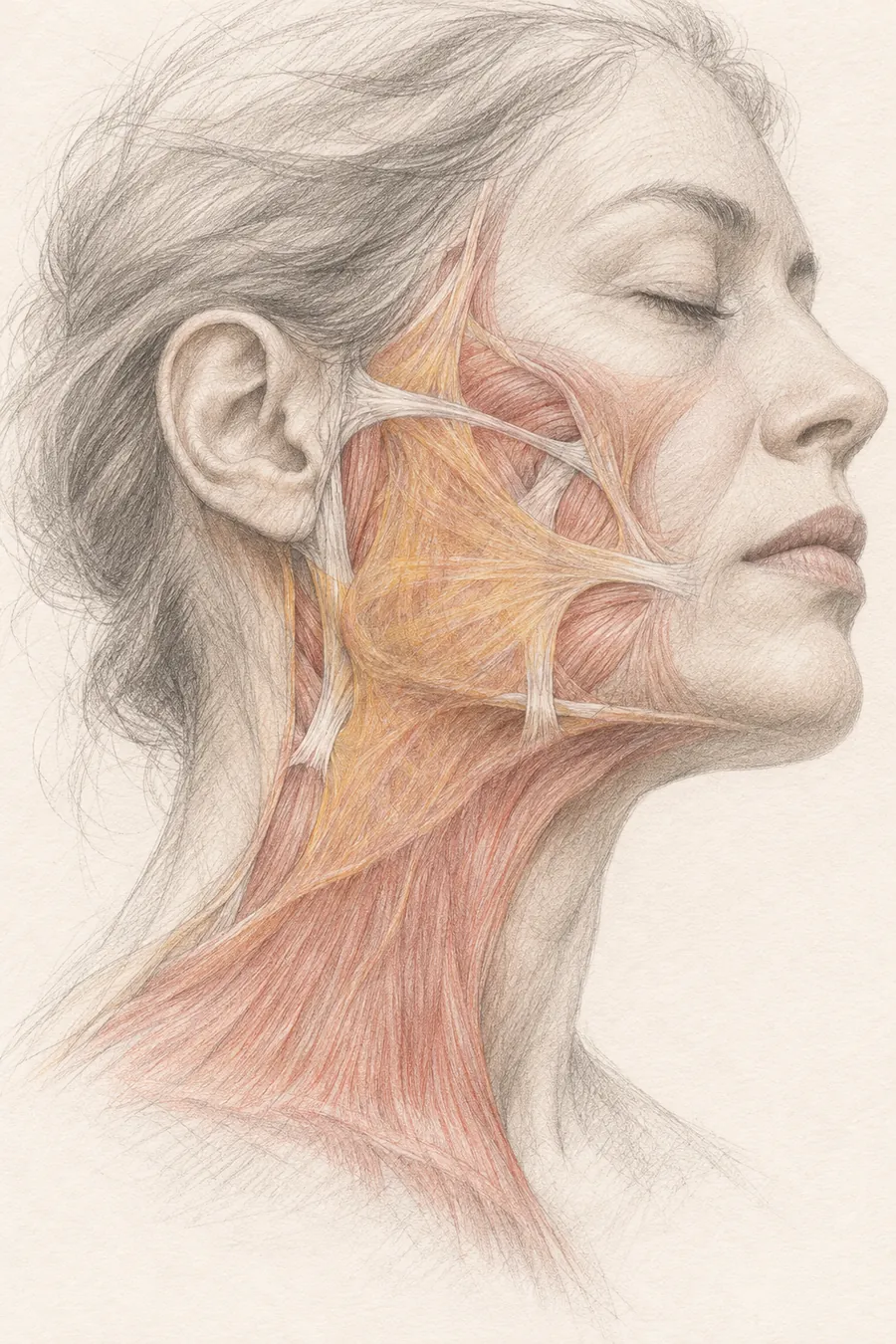
A deep plane facelift does more than pull the skin. It releases the retaining ligaments—structures that anchor deeper tissues toward the bone—in the layer beneath the fascia, then repositions and secures the sagging tissues together. Because the deeper layers are involved, the tissues there take time to settle into their new positions. This is why we explain the initial change in facial contours separately from the settling process over several months.
At around 3 months, firmness and tightness may occur. The area may feel firm to the touch, or you may feel tightness when making facial expressions. These changes can occur during recovery, but persistent pain should be checked without waiting.
For up to 3 months after surgery, swelling and bruising care continues, along with checks of the incisions and scars. If needed, laser treatment to support scar healing and recovery may be considered. After the recovery period, regenerative treatments such as Re2O or PRP may be considered based on individual needs. Treatment options are determined after an examination, depending on the extent of surgery and the state of recovery, and are not recommended the same way for everyone.
If facial sensation is reduced or facial expressions feel awkward, will they return to normal?
05Will reduced facial sensation or awkward facial expressions return to normal?
Answer Changes in sensation and nerve injury are risks discussed before surgery. In studies, most cases were temporary, but each person's progress needs to be assessed individually through an examination.
Because a deep plane facelift involves deeper tissue layers, the surgeon needs a thorough understanding of the areas where facial nerves pass. VITAL Plastic Surgery discusses risks such as nerve injury, changes in sensation, and hematoma before surgery.
A meta-analysis of 67 facelift studies involving more than 15,000 people estimated the rate of motor nerve injury at approximately 0.66% and sensory nerve injury at approximately 0.39%. In each case, approximately 0.05% were permanent2. Because the criteria and surgical techniques varied between studies, these figures cannot be applied directly to an individual's risk.
A systematic review of 20 studies on facial nerve injury after facelift surgery found that the incidence ranged from 0.5% to 5% across studies, and approximately 70% recovered fully within 6 months with conservative treatment (nonsurgical treatment such as medication and rehabilitation). However, approximately 10% reportedly had persistent symptoms3.
If facial movement seems uneven or you feel numbness, do not assess it on your own. Please mention it at your follow-up appointment. At the 1-, 3-, and 6-month follow-ups, we check not only photos but also any discomfort and changes in function.
What is checked at 6 months and 1 year?
06What is checked at 6 months and 1 year?
Answer At 6 months, we compare photos taken at different stages and changes in function to assess whether additional care is needed. At 1 year, we take a longer-term look at tissue flexibility and changes in appearance and function.
At the 6-month follow-up, we compare your current appearance with photos taken before surgery and at 1 and 3 months using the same criteria. As swelling subsides, day-to-day changes can feel significant, but comparing photos side by side over several months makes it clearer how the tissues have settled. An examination at this visit determines whether additional care is needed.
At the 1-year follow-up, we take a longer-term look at tissue flexibility and changes in appearance and function. Scars may be red and firm at first, mature over several months or more, and continue to change for over a year, so we also check their color and thickness at this point. The time it takes for healing to be complete varies from person to person, so we do not say that everyone will be fully healed within a set number of months.
Between 6 months and 1 year, we discuss skin care and elasticity alongside regular follow-up visits. Surgery repositions sagging structures, while aging continues afterward. Lifting devices are selected according to whether the concern is structural sagging or skin quality, and what is needed depends on your condition at the time.
Do not wait if you experience these symptoms
07Do not wait if you have these symptoms
Answer If you have sudden severe pain, bleeding that does not stop, rapidly worsening swelling on one side, or possible signs of infection such as a high fever or pus, contact the clinic immediately rather than waiting for your appointment.
Normal swelling is similar on both sides and decreases after a few days. If one side swells quickly and hurts, it may be a hematoma, a collection of blood under the skin. Hematoma is one of the risks VITAL Plastic Surgery discusses before surgery.
In a study of 1,236 consecutive facelifts, 23 hematomas (1.86%) required another surgery to drain the blood, and all occurred within 48 hours after surgery. Of these, 57% were identified within 15 hours and 26% between 15 and 24 hours4. This is older data from a single institution and may not reflect current rates, but it shows why the first day or two require particular care.
In another study of 1,078 facelift patients, hematomas occurred in 4.2%. Anterior platysmaplasty, high systolic blood pressure, being male, taking aspirin or anti-inflammatory pain relievers, and smoking were associated with hematomas5. For the same reason, VITAL Plastic Surgery checks for high blood pressure and anticoagulant use before surgery and does not proceed immediately if they are not controlled.
Possible signs of infection, such as a high fever or pus, should also be addressed without delay. Scarring and asymmetry are other risks to discuss, and this is not a complete list of possible risks. Risks can vary depending on your health, previous treatments, and the method and extent of surgery, so they are explained in detail during your examination and the consent process.
| Category | How it looks | What to do |
|---|---|---|
| Changes that can wait | Similar swelling and bruising on both sides, firmness and tightness around 3 months | Discuss at your scheduled follow-up |
| Changes to mention at your follow-up | An unusual facial expression on one side, reduced sensation, differences between sides | Mention them at your appointment; if pain persists, contact the clinic without waiting |
| Symptoms requiring immediate contact | Sudden severe pain, bleeding that does not stop, rapidly worsening swelling on one side, high fever · pus | Contact the clinic immediately without waiting for your appointment |
08Three things we check first during your consultation
What we assess first during consultation
- Where and why the main sagging has developed — whether to consider a neck lift as well
- The tissue layers and extent of correction — the associated recovery and potential lasting issues
- Health issues to address first, such as high blood pressure, diabetes, and anticoagulant use, and whether you can make time for recovery
These are general care principles. The actual decision is made after an examination.
When other care is needed first We do not recommend proceeding directly to surgery if you have a health condition such as high blood pressure or diabetes that needs to be controlled first, if you cannot make time for recovery, if you expect no scarring at all, or if your main concern is loss of volume or skin quality rather than sagging. If it is difficult to make time for recovery, we first compare what can be addressed with nonsurgical treatments and what requires surgery.
Here is the answer to the initial question, “After a facelift, when can I see people, and when will my face settle?” Swelling is most severe on days 3–4, facial stitches are removed after 5–7 days and scalp stitches after 10–14 days, and return to daily activities is generally expected at about 10 days. However, swelling and differences between the two sides may remain at 1 month, firmness and tightness may remain at 3 months, and scars may continue to change for a year or more. VITAL Plastic Surgery checks your recovery at 1 week and at 1, 3, 6, and 12 months, explains the difference between the initial changes in facial contours and the time it takes for the tissues to settle, and identifies symptoms that should be addressed without waiting.
— VITAL Plastic Surgery
When you make your appointment, just let us know, “I'd like to start by discussing how to plan my recovery.” We'll begin there during your consultation. You do not need to make a decision on the day of your consultation.
Related ReadingDeep Plane Facelift · Neck Lift Care Guide
READ NEXT
Read Next

FAQ
Frequently Asked Questions
When are stitches removed?
Facial stitches are removed after 5–7 days, and scalp stitches after 10–14 days. At the approximately 1-week follow-up, bleeding, infection, swelling, and the condition of the wounds are assessed to determine when to remove the stitches.
When can I tie my hair back?
You can resume after a follow-up confirms that it does not pull on the wounds. Scars around the ears may be visible when your hair is tied back, so it helps to tell us beforehand how you usually wear your hair.
Do I need to wear a compression band?
Use compression only if instructed to do so for your procedure. We do not prescribe the same method or duration for everyone, so please follow the instructions you receive.
How long should I stay if I am traveling from abroad?
We use approximately 14–21 days as a starting point for discussion, including stitch removal and the first follow-up. This is not a period established by the clinic and may be extended depending on the risk of complications.
Will recovery take longer if I have eye surgery on the same day?
The recovery periods are not simply added together, but swelling, discomfort, and the demands of aftercare may increase. We assess your health, total surgery time, and recovery demands when considering whether to perform the procedures on the same day.
BEFORE CONSULTATION
What to Prepare Before Your Consultation
- Clear Your SchedulePlease plan around peak swelling on days 3–4, facial stitch removal after 5–7 days, scalp stitch removal after 10–14 days, and a return to daily activities after about 10 days.
- Stop Smoking and Avoid AlcoholWe provide these essential instructions before surgery. Smoking and alcohol affect bleeding and wound healing.
- Medications and SupplementsWe recommend stopping herbal medicines and supplements such as omega-3 when possible because they may increase bleeding. Please tell us about every medication you take.
- Medical historyWe first check for high blood pressure, diabetes, and anticoagulant use. If these conditions are not controlled, surgery cannot proceed right away.
- Filler and thread history and hairstylePlease tell us about any previous fillers, threads, and facelift procedures. Let us know how you usually wear your hair as well, as this helps us plan the incisions and recovery schedule.
REFERENCES
References
- Gupta V, Winocour J, Shi H, et al. Preoperative Risk Factors and Complication Rates in Facelift: Analysis of 11,300 Patients. Aesthetic Surgery Journal. 2016. doi:10.1093/asj/sjv162 (View abstract)
- Gandra G, Silva BS, Horta R. Facelift Surgery and Nerve Injury: A Systematic Review and Meta-Analysis. Aesthetic Plastic Surgery. 2025. doi:10.1007/s00266-025-04932-7 (View abstract)
- Arianpour N, Khiabani K, Aberoumand H, et al. Management and outcomes of facial nerve injury following rhytidectomy: a systematic review. Maxillofacial Plastic and Reconstructive Surgery. 2025. doi:10.1186/s40902-025-00494-5 (View abstract)
- Rees TD, Barone CM, Valauri FA, et al. Hematomas requiring surgical evacuation following face lift surgery. Plastic and Reconstructive Surgery. 1994. doi:10.1097/00006534-199405000-00012 (View abstract)
- Grover R, Jones BM, Waterhouse N. The prevention of haematoma following rhytidectomy: a review of 1078 consecutive facelifts. British Journal of Plastic Surgery. 2001. doi:10.1054/bjps.2001.3623 (View abstract)
The findings in these papers reflect the participants and conditions of each study and do not mean that every individual will have the same results.
This article provides general medical information and does not replace diagnosis or treatment. Surgical results and recovery vary by individual, and complications such as bleeding, infection, scarring, and asymmetry may occur.
More articlesVITAL Plastic Surgery Medical Articles
RESERVATION
You do not need to decide the day of your consultation.
Organize questions about this page without entering your name, contact information, or medical history. This does not submit an appointment request.