PLASTIC SURGERY
MEDICAL COLUMN
Questions Answered Directly by the Doctor Before You Decide on Surgery
Revision surgery
Doctor’s Notes
Is It Okay to Decide on Revision Surgery Now?
We first review your previous surgical records, current function and tissue condition, and the time needed for recovery.
Medically reviewed · Dr. Hyungwoo Yim, Medical Director (Board-Certified Plastic Surgeon)
SHORT ANSWER
First, the Short Answer
- We first determine whether revision is needed now, before considering whether it is possible.
- We first review your previous surgical records, current function and tissue condition, and the time needed for recovery.
- Tightness, changes in eyelid position, hollowing, or asymmetry after previous lower eyelid surgery require different approaches depending on the cause and stage of recovery.
- We first assess adhesions from the previous surgery and the remaining fat, then consider reinforcing the orbital septum rather than repeating fat repositioning.
- We explain whether the desired changes are achievable and may advise against immediate surgery.
“Doctor, my under-eye area looks hollow and uneven after lower eyelid surgery. Do I need revision surgery right away?”
This is a paraphrase of a question we often hear during consultations.
This article walks through how we determine whether revision surgery is needed now, why these changes occur, how we classify common problems, and what determines the timing and surgical approach. Section 05 explains when an immediate evaluation is needed and when to wait.

01We first determine whether revision surgery is needed now, before considering whether it is possible
Answer We first determine whether revision surgery is needed now, before considering whether it is possible. Similar appearances can have different causes and require different approaches, so we do not repeat the same surgery based on appearance alone.
We first review your previous surgical records, current function and tissue condition, and the time needed for recovery.
Tightness, changes in eyelid position, hollowing, or asymmetry after previous lower eyelid surgery require different approaches depending on the cause and stage of recovery. It is important to weigh the expected improvement against the burden of additional surgery.
Revision lower blepharoplasty reassesses and corrects tightness, outward turning of the eyelid, uneven contours, hollowing, asymmetry, and scarring after previous surgery. Similar appearances can have different causes and require different approaches, so we do not repeat the same surgery based on appearance alone.
Before surgery, we first identify which tissue layers are deficient, where tissues have adhered, and how much support remains. About 30% of our patients come for revision surgery, so we include this assessment as part of their care.
Key point We first identify which tissue layers are deficient, where tissues have adhered, and how much support remains.
Why do these changes occur after previous surgery?
02We examine why these changes have occurred
Answer We assess tissue condition, function, and the conditions for recovery alongside appearance, because several factors can contribute to a single symptom.
We assess tissue condition, function, and the conditions for recovery alongside appearance.
- Extent of previous surgery The extent of treatment to the skin, fat, and muscle, along with surgical records, provides important information for understanding your current condition.
- Scars and adhesions Tissue scarring, adhesions, and changes in supporting structures can affect appearance and function.
- Current stage of recovery We adjust the priorities for observation and treatment based on whether the tissues are still healing and how symptoms are changing.
Several factors can contribute to a single symptom. This explanation is for general understanding; the cause in each individual must be determined through an examination.
Key point We separately assess the extent of the previous surgery, scarring and adhesions, and the current stage of recovery. An examination is needed to determine the cause in each individual.
If the cause differs, does the recommended approach differ too?
03We do not recommend the same surgery for the same reason in every case
Answer We do not recommend the same surgery for the same reason in every case. If recovery is still underway, or if the burden of additional surgery outweighs the expected improvement, we do not recommend proceeding right away.
We explain what to assess first and how much treatment is appropriate.
- If recovery is still underway An examination helps distinguish changes that need time from problems that need immediate attention.
- If there are problems with eyelid closure or position We prioritize eye function and the condition of the eye’s surface along with appearance. We also consider care from a relevant specialist when needed.
- If the burden of additional surgery is greater We explain whether the desired changes are achievable and may advise against immediate surgery.
Limitations and risks matter as much as the possible changes. If a substantial amount of tissue has already been lost, surgery may not be able to restore the original condition.
Revision surgery also requires time for damaged tissue to return to normal. We explain what can be improved and the limitations so you can understand both before deciding. You do not need to make a decision on the day of your consultation.
This general explanation is based on questionnaire responses from Medical Director Dr. Hyungwoo Yim. It does not replace an individual diagnosis.
Key point We explain what can be improved and the limitations so you can understand both before deciding.
What specifically do we assess first during an examination?
04What we assess first in revision lower blepharoplasty
Answer We divide common problems into five categories and assess the orbital septum before repositioning fat again. Previously repositioned fat is often adherent to the tissue in front of it, and repositioning more fat over it may increase the adhesions that need to be addressed.
We divide common problems into five categories.
- For ectropion and tightness, we assess deficient tissue layers, adhesion sites, and support to guide reconstruction.
- For asymmetry, we distinguish underlying skeletal differences, eyelid-opening function, and differences that developed after surgery.
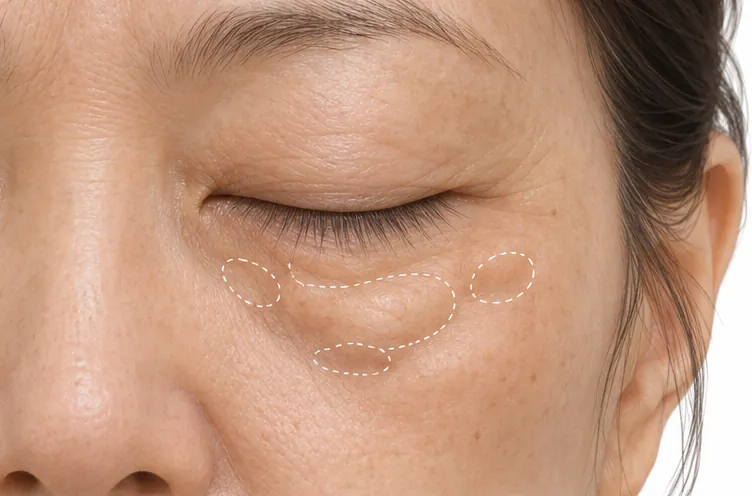
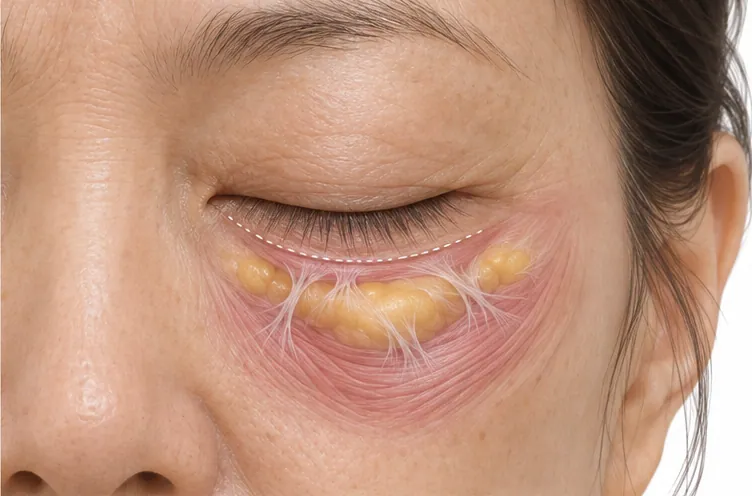
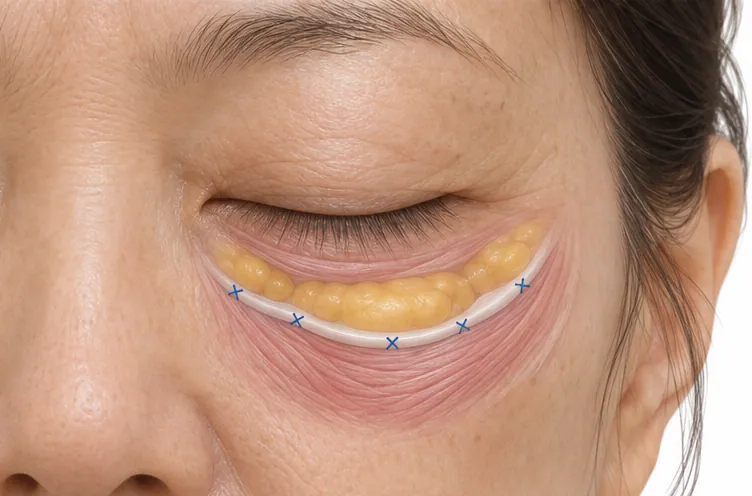
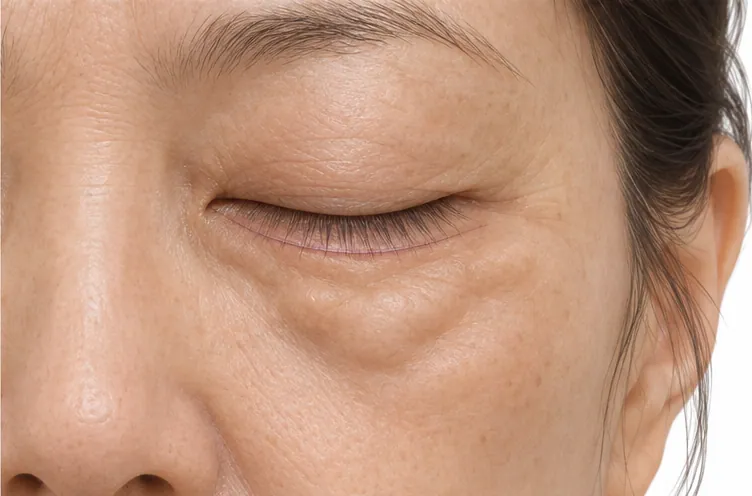
- For uneven contours, we separately assess remaining fat, volume deficiencies, injected materials, and adhesions.
- For hollowing, we assess the effects of excessive tissue removal and consider adding tissue and releasing adhesions.
- For scars and unnatural lines, we assess the stage of healing and tissue deficiencies to choose between scar care and surgery.
We assess the orbital septum before repositioning fat again. During revision surgery, we often find that previously repositioned fat has adhered to the tissue in front of it. Repositioning more fat over it may increase the adhesions that need to be addressed. I therefore first assess the adhesions and remaining fat, then consider revision surgery to reinforce the orbital septum rather than repeating under-eye fat repositioning. For thinned skin, we also use Re2O to address the underlying tissue condition.
If a tent holds too much baggage (fat), simply removing the baggage can leave the outer fabric (skin) more wrinkled. To smooth the under-eye area, the internal structures that act like tent ropes need to be lifted, and the thinning fabric needs reinforcement.
What the doctor looks at first
- We identify which tissue layers are deficient, where tissues have adhered, and how much support remains.
- We use photographs showing the current condition and an examination to directly assess adhesions, remaining tissue, and eyelid closure. Previous surgical records help us estimate which tissue layers were treated.
- We assess the stage of recovery and check for urgent symptoms. Acute hematoma, infection, and vision problems require immediate evaluation.
These are general care principles. The actual decision is made after an examination.
At your consultation, you can say, “I read the article on revision lower blepharoplasty. Please explain whether I should wait and what needs to be assessed first.” We will walk you through the points in the same order as this article.
Key point We first consider reinforcing the supporting structures rather than repeating fat repositioning.
What determines the timing of revision surgery?
05Timing depends on symptoms and tissue condition
Answer Acute hematoma, infection, and vision problems require immediate evaluation, while revisions to improve appearance wait until the tissues have stabilized. From 3 weeks to 3 months after surgery, tissues become lumpy and tight as part of healing, so we do not decide on revision surgery based on appearance during this period alone.
Waiting for scars to mature is not appropriate in every case. Acute hematoma, infection, and vision changes require immediate evaluation. We also assess patients early if abnormal eyelid position exposes the cornea or if pain and functional problems persist. For cosmetic revision, waiting for the tissues to stabilize may be preferable, so we generally assess readiness after at least 6 months to 1 year or more of recovery.
From 3 weeks to 3 months after surgery, tissues become lumpy and tight. This is part of the healing process, so we do not decide on revision surgery based on appearance during this period alone. From 3 months to 1 year, tissues soften, redness fades, and the two sides gradually become more balanced. We check progress at 1 · 3 · 6 months · 1 year.
Recovery timelines are general estimates and vary by individual. Contact us immediately for sudden severe pain, decreased vision, bleeding that does not stop, or rapidly worsening swelling on one side.
| Timing | What is happening in your body | What to do during recovery |
|---|---|---|
| 3–4 days after surgery | Swelling and bruising are at their worst. | Sleep with your head slightly elevated, and apply cold compresses gently without letting ice touch your skin or eyes directly. |
| Days 5–7 | Stitches are removed if an incision was made. | We recommend resuming makeup the day after stitch removal. |
| 3 weeks–3 months | During the scar contraction phase, tissues tighten and become firm, causing lumpiness and a pulling sensation. | We do not decide on revision surgery based on appearance during this period alone. Resume strenuous exercise and sauna use after 3–4 weeks. |
| 3 months–1 year | Tissues soften, redness fades, and the two sides gradually become more balanced. | We check progress at 1 · 3 · 6 months · 1 year. For revisions to improve appearance, we consider a waiting period of at least 6 months to a year or longer. |
| At any stage | Sudden severe pain, decreased vision, bleeding that will not stop, rapidly worsening swelling on only one side, or corneal exposure | Contact us right away. Corneal exposure, pain, or vision changes require an immediate examination. |
Key point We do not decide on revision surgery based solely on appearance between 3 weeks and 3 months. For revisions to improve appearance, we consider a waiting period of at least 6 months to a year or longer.
How does the revision procedure vary with your condition?
06The Surgical Process Varies Depending on Your Condition
Answer The procedure varies depending on whether the main concern is uneven contours, tightness or outward turning of the eyelid, or hollowing. Similar appearances can have different causes and require different approaches.
This is a simplified explanation of typical procedures. The actual approach and extent of surgery are determined after an examination.
When unevenness is the main concern
When the eyelid is pulled or turned outward
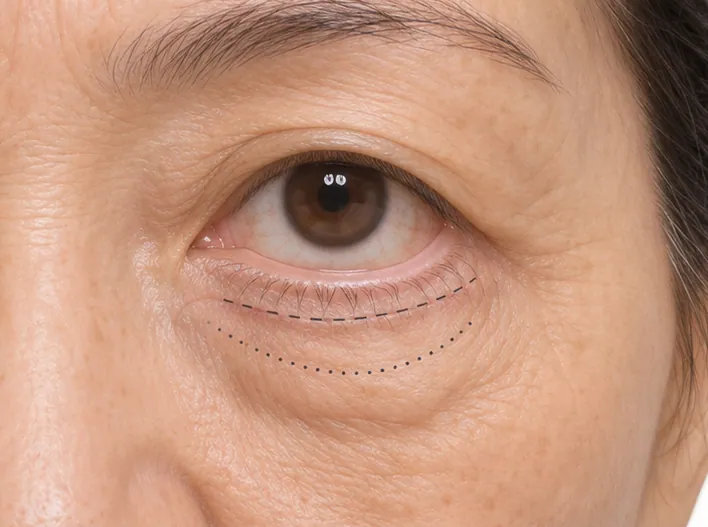
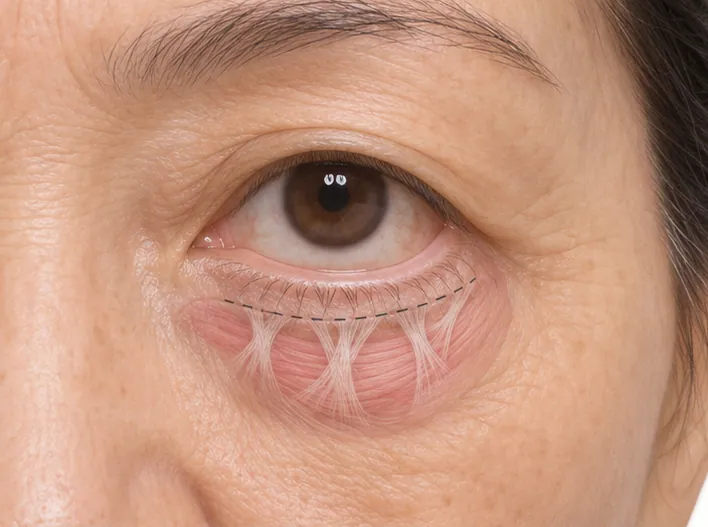
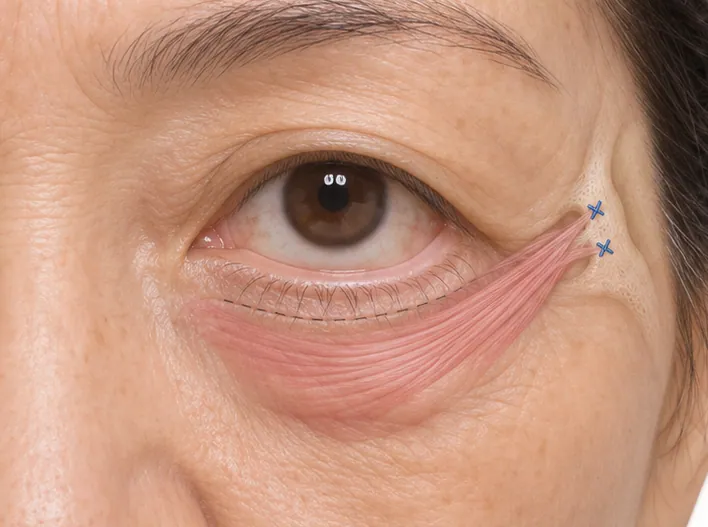
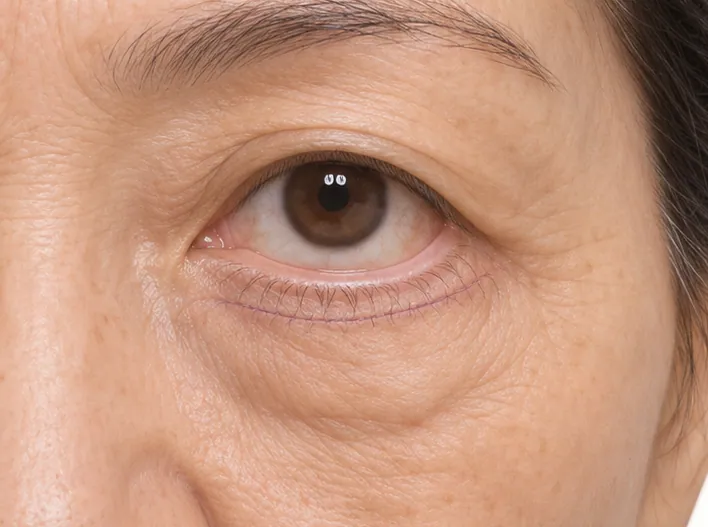
When hollowing is severe
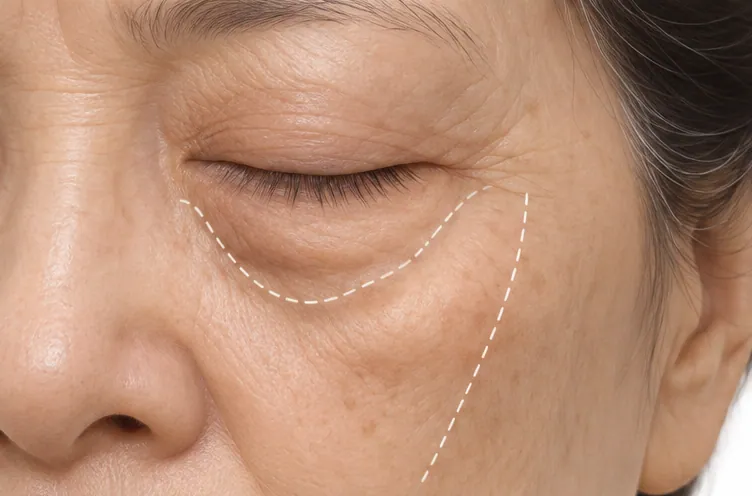
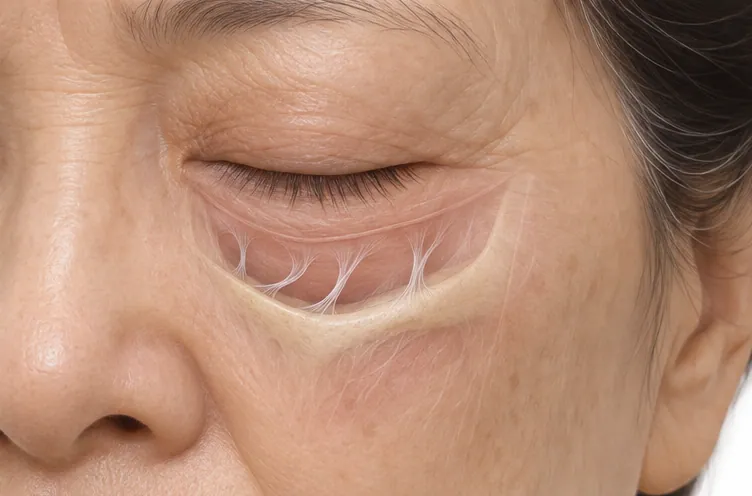
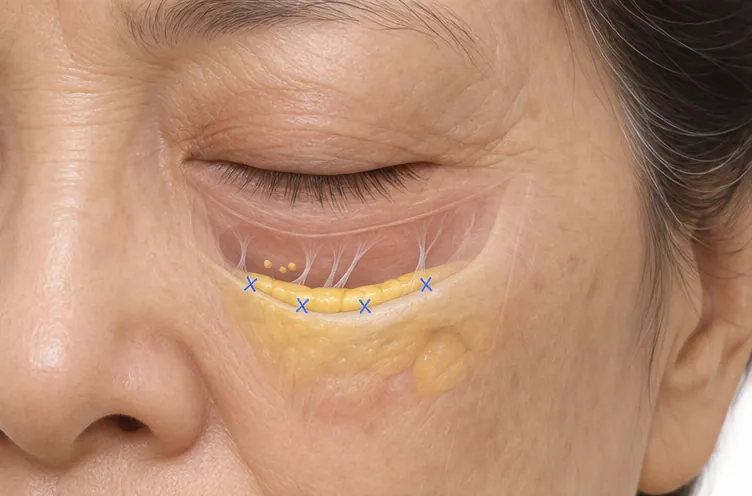
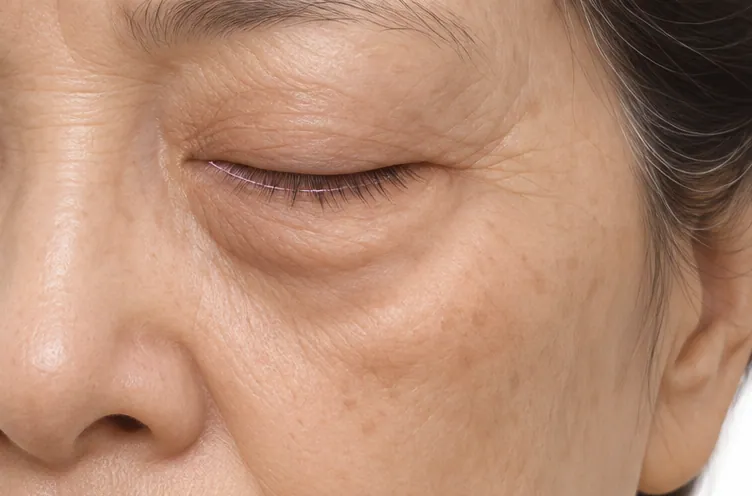
Key point These are typical procedural approaches, but the actual approach and extent of surgery are determined after an examination.
Here is the answer to the opening question: “My under-eye area looks hollow and uneven after lower eyelid surgery. Do I need revision surgery right away?” We first determine whether revision surgery is needed now, before considering whether it is possible. Acute hematoma, infection, and vision problems require immediate evaluation, but for revisions to improve appearance, it may be better to wait until the tissues stabilize. We first assess adhesions from the previous surgery and the remaining fat, then explain whether the changes you want are achievable. We may not recommend surgery right away. Our principle is to avoid repeating the same surgery based on appearance alone.
— Dr. Hyungwoo Yim
At your consultation, you can say, “I read the article on revision lower blepharoplasty. Please explain what needs to be assessed first in my case.” We will walk you through the points in the same order as this article.
FAQ
Frequently Asked Questions
It has been two months since surgery, and the area feels lumpy and tight. Is something wrong?
Between 3 weeks and 3 months, scar contracture can pull on the tissues and make them firm. This is often when patients feel most anxious. The eyes may not close fully, or the under-eye area may look slightly pulled and unnatural. However, we do not assume that all such changes are normal healing. Corneal exposure, pain, or vision changes require prompt examination.
How long after surgery can I have revision surgery?
There is no single waiting period for everyone. We assess the stage of healing, the urgency of functional problems, and the tissue condition together. We do not determine the timing of revision surgery from photos alone.
What if I cannot obtain my previous surgical records?
Photos showing your current condition and an examination are most important. Records are helpful, but even without them, we can assess adhesions and remaining tissue by touch. It also helps if you tell us what you remember about the surgery you had.
BEFORE CONSULTATION
What to Prepare Before Your Consultation
- Front-view photo · Eyes openPlease bring recent photos and, if available, photos taken before the changes appeared. They help us compare when the changes began.
- Records of previous eye surgery · TreatmentsWrite down when, where, and how you were treated, including whether you received filler or fat injections.
- Contact lenses · Eye drops · Daily habitsTell us how long you have worn contact lenses and what type, which eye drops you use, and whether you rub your eyes frequently.
- Discomfort when opening your eyesWrite down what you usually notice, such as whether you tense your forehead, your eyelids feel heavy, or your vision is obstructed.
- The one thing that concerns you mostMake it your first question at your consultation.
More articlesVITAL Plastic Surgery Medical Articles
Once you feel fully informed, schedule a consultation.
Is now the right time to decide on revision surgery? Book a Consultation
You do not need to decide the day of your consultation.