PLASTIC SURGERY
MEDICAL COLUMN
Questions Answered Directly by the Doctor Before You Decide on Surgery
Eyes
Doctor’s Notes
Do Sleepy-Looking Eyes Always Mean Ptosis?
Is eyelid skin covering the eyes, or has the ability to open them changed? Identifying the cause comes first.
Medically reviewed · Dr. Hyungwoo Yim, Medical Director (Board-Certified Plastic Surgeon)
SHORT ANSWER
First, the Short Answer
- A sleepy appearance alone does not confirm ptosis.
- True ptosis involves actual muscle weakness. Pseudoptosis, on the other hand, occurs when muscle strength is normal but sagging eyelid skin covers part of the iris.
- The standard is measurement, not impression. We measure MRD1, the distance from the center of the pupil to the upper eyelid. If it is within the normal range of about 4 mm, we do not perform ptosis surgery.
- When it is difficult to open your eyes, you may use your forehead muscles to help, which can cause forehead wrinkles. Lifting only the forehead may actually make the problem worse.
“Doctor, my eyelids feel heavy when I open my eyes, and I tense my forehead. Do my sleepy-looking eyes mean I have ptosis?”
This is a paraphrase of a question we often hear during consultations.
This article explains how ptosis is measured, how excess skin covering the iris differs from weak eyelid-opening muscles, and how surgical steps, limitations, and risks vary by condition. Section 04 walks through the actual evaluation process.
01The Standard Is Measurement, Not Impression
Answer The decision to perform ptosis surgery is based on measurements of how much of the iris is visible, rather than a sleepy appearance. These measurements help avoid unnecessary muscle surgery.
Sometimes one double-eyelid crease looks larger because a person raises that eyebrow to compensate for weak eyelid-opening muscles. Explaining the cause, rather than just the visible result, is an important part of the process.
Is eyelid skin covering the eyes, or has the ability to open them changed? Identifying the cause comes first.
I base my assessment on science rather than impression. I measure iris exposure using MRD1. If it is within the normal range (about 4 mm), I treat it as pseudoptosis caused by excess skin and address only the skin, rather than performing ptosis surgery. These measurements help avoid unnecessary muscle surgery.
Key point If MRD1 is within the normal range (about 4 mm), we first consider addressing excess skin rather than performing ptosis surgery.
What do we assess separately during the examination?
02We Assess Eye Appearance and Eyelid-Opening Function Separately
Answer A sleepy appearance alone does not confirm ptosis. We distinguish eyelid-opening function from excess skin, which can obstruct vision or make the eyes look heavy.
A sleepy appearance alone does not establish a diagnosis of ptosis. We assess eyelid position and movement, compensatory eyebrow movement, excess skin, and eyelid closure to determine whether correction is needed for the underlying cause.
When a drooping eyelid covers part of the iris, it narrows the field of vision and may cause you to use your forehead muscles unconsciously to open your eyes. I therefore check eyelid-opening function first. If correction is needed, I adjust muscle strength using an approach that takes natural recovery into account.
During the examination, we assess eyebrow position, hollow areas, eyelid height, eyelid-opening strength · excess skin.
- We check eyelid-lifting function and movement to determine whether functional correction is actually needed.
- We distinguish eyelid-opening function from excess skin, which can obstruct vision or make the eyes look heavy.
- Eyebrow position, compensatory movements, eyelid closure, and dryness symptoms are important when determining the extent of correction.
We review the method and extent of correction needed and explain the functional and appearance changes that may be expected. We consider approaches based on the condition of the skin and eyebrows and determine whether ptosis correction is necessary. After assessing the existing condition, eye function, scarring, and stages of recovery, we also explain the limitations of correction.
This general explanation is based on questionnaire responses from Medical Director Dr. Hyungwoo Yim. It does not replace an individual diagnosis.
Key point We assess eyelid position and movement, compensatory eyebrow movements, excess skin, and eyelid closure to determine whether correction is needed for the underlying cause.
So, do all sleepy-looking eyes have ptosis?
03Sleepy-Looking Eyes Do Not Always Mean Ptosis
Answer Sleepy-looking eyes do not always mean ptosis. True ptosis requires ptosis repair (muscle adjustment), while pseudoptosis may improve with removal of sagging skin or creation of an eyelid crease alone.
Ptosis is a condition in which weakness in the eyelid-opening muscles and their aponeurosis causes the upper eyelid to cover part of the iris. It is often first noticed as a sleepy appearance, but it can obstruct vision and cause forehead strain, leading to eye fatigue and forehead wrinkles. Treatment differs from that for pseudoptosis, in which sagging eyelid skin covers part of the iris, so we first measure how much of the iris is visible to distinguish the two.
I distinguish true ptosis, which involves actual muscle weakness, from pseudoptosis, in which muscle strength is normal but sagging eyelid skin covers part of the iris. True ptosis requires ptosis repair (muscle adjustment), while pseudoptosis may improve with removal of sagging skin or creation of an eyelid crease alone. Unlike surgery that only creates a double-eyelid crease, ptosis repair directly affects eyelid-opening function and eyelid height.
Forehead wrinkles can sometimes start with the eyes. When opening the eyes is difficult, the forehead muscles lift the eyelids. If this habit continues over time, forehead wrinkles and raised eyebrows can persist. For this reason, I check eyelid-opening strength before treating the forehead in patients with deep forehead wrinkles. If the cause lies in the eyes, lifting only the forehead may make the problem worse.
Eye rubbing and contact lenses can also be contributing causes. The eyelid-opening muscle inside the eyelid is like a thin rubber band that is forcibly stretched each time you rub your eyes. Even wearing contact lenses can weaken eyelid-opening strength.
When the eyelids obstruct vision, I explain that this surgery is performed for the field of vision and eye health as well as appearance. Salamanders living in caves with no light are said to eventually lose their sight. When a drooping eyelid covers the pupil like a roof, it is like leaving a window blind halfway down. The double-eyelid crease is an important structure. Problems with vision itself require a separate ophthalmologic evaluation.
Key point I check eyelid-opening strength before treating the forehead in patients with deep forehead wrinkles. If the cause lies in the eyes, lifting only the forehead may make the problem worse.
What is the evaluation process in actual practice?
04How We Evaluate Ptosis
Answer We first distinguish true ptosis from pseudoptosis, check function and the field of vision, and then choose a correction method. Because treatment differs from that for pseudoptosis, we first measure how much of the iris is visible to distinguish the two.
- Distinguish true ptosis · pseudoptosis: We assess eyelid-opening muscle strength and skin coverage separately.
- Check function · field of vision: We assess forehead muscle use, visual obstruction, eyelid closure, and dryness.
- Choose a correction method: For true ptosis, we first consider ptosis repair; for pseudoptosis, excess skin removal · crease creation.
- Plan for hollowing · excess skin together: If the eyes are hollow or the skin is sagging, we address these within the same plan.
When We Do Not Recommend Surgery Right Away
- When MRD1 is within the normal range and removing excess skin is sufficient
- When a history of thyroid eye disease, glaucoma, autoimmune disease, or another condition needs to be reviewed first
- When you take anticoagulants or have uncontrolled high blood pressure or diabetes
- When a thorough examination and explanation are difficult to complete
| What we check | How we assess it | What can happen if overlooked |
|---|---|---|
| Iris Exposure (MRD1) | We measure the distance from the center of the pupil to the upper eyelid. If it is within the normal range of about 4 mm, we consider it pseudoptosis and first consider addressing excess skin. | Without measurements, unnecessary muscle surgery may result. |
| Forehead · Eyebrow Compensation | We check whether you use your forehead muscles to open your eyes. In patients with deep forehead wrinkles, we check eyelid-opening strength before treating the forehead. | If the cause lies in the eyes, lifting only the forehead may make the problem worse. |
| Excess Skin | We check whether sagging skin covers part of the iris, then measure and remove only a minimal amount while preserving proper eyelid closure. | Excessive removal can cause incomplete eyelid closure or dryness. |
| Extent of Muscle Adjustment · Eyelid Closure | We assess eyelid closure and the ocular surface together to determine the range between overcorrection and undercorrection. | Asymmetry, undercorrection or overcorrection, difficulty closing the eyes, and dryness may occur. |
What the doctor looks at first
- Eyelid-opening muscle strength: We measure muscle function and iris exposure (MRD1) to determine whether true ptosis is present.
- Forehead · eyebrow compensation: We check whether you use your forehead muscles to open your eyes.
- Eyelid closure · dryness and daily habits: We assess the ocular surface when determining the extent of correction and check acquired factors such as contact lens wear and eye rubbing.
These are general care principles. The actual decision is made after an examination.
During your consultation, you can say, “I read your article on ptosis. Please explain what you would check first to determine whether my concern is caused by excess skin or weak eyelid-opening muscles.” We will walk you through the assessment in the order described here.
Key point When MRD1 is within the normal range and addressing excess skin is sufficient, we do not recommend ptosis surgery right away.
How do the surgical steps differ for true ptosis and pseudoptosis?
05The Surgical Process Varies Depending on Your Condition
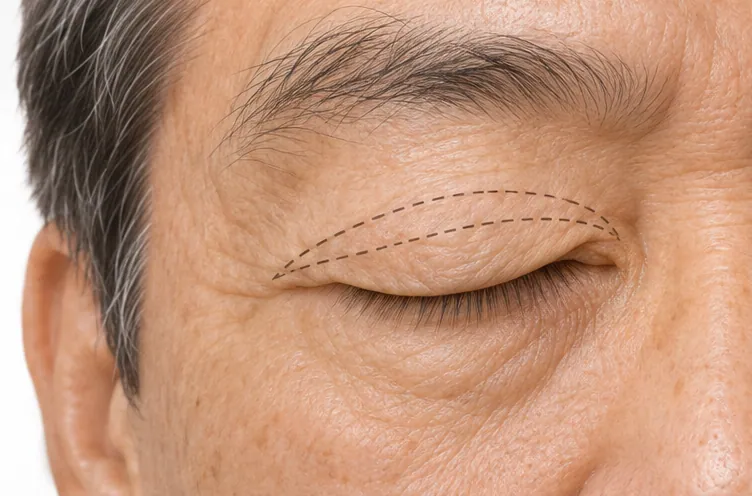
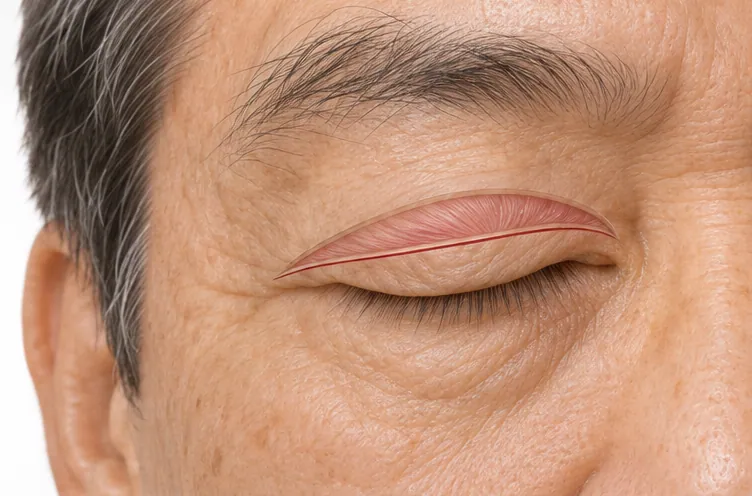
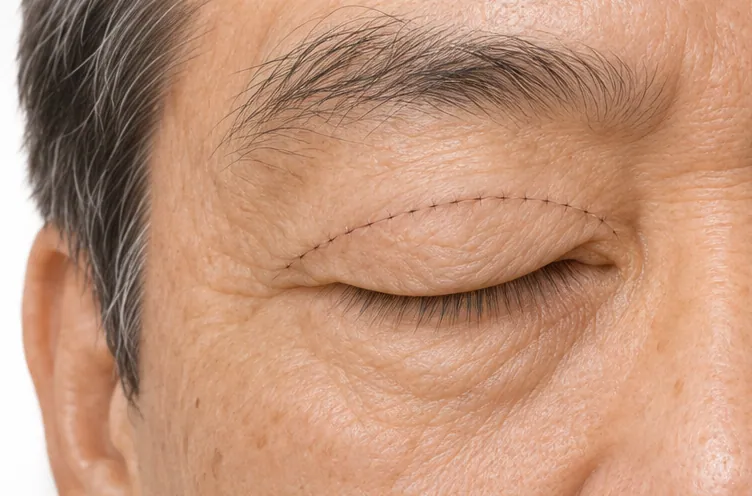
Answer The method depends on whether you have true ptosis or pseudoptosis caused by excess skin. If muscle strength is weak, ptosis repair adjusts the muscle tension and secures it to the tarsal plate. If muscle function is normal and excess skin is covering the eye, we remove the sagging skin.
The method depends on whether you have true ptosis or pseudoptosis caused by excess skin.
When skin covers the pupil (pseudoptosis)
When eyelid-opening strength is slightly reduced
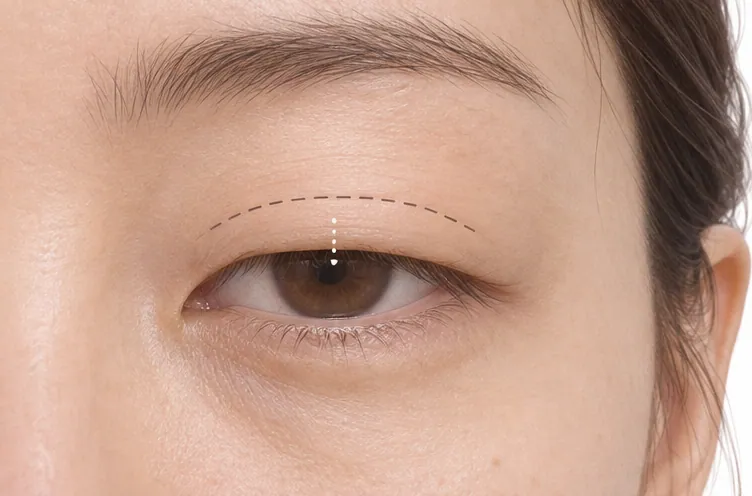
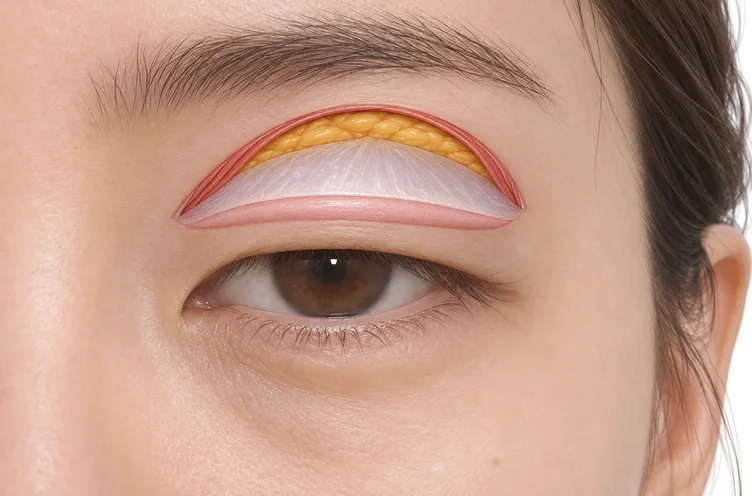
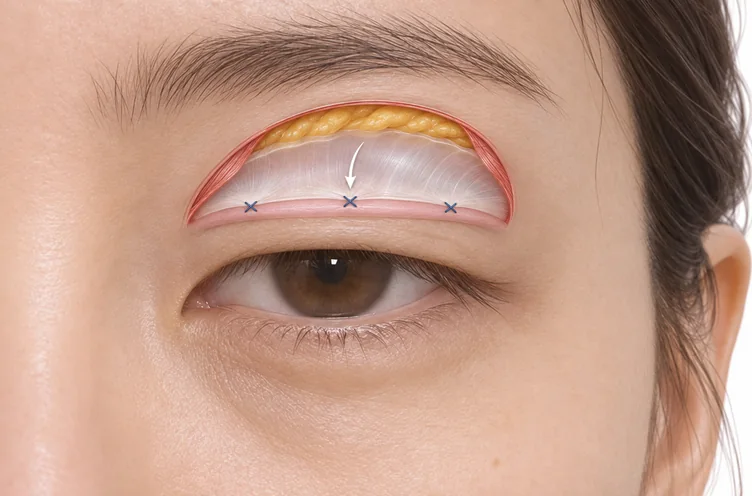
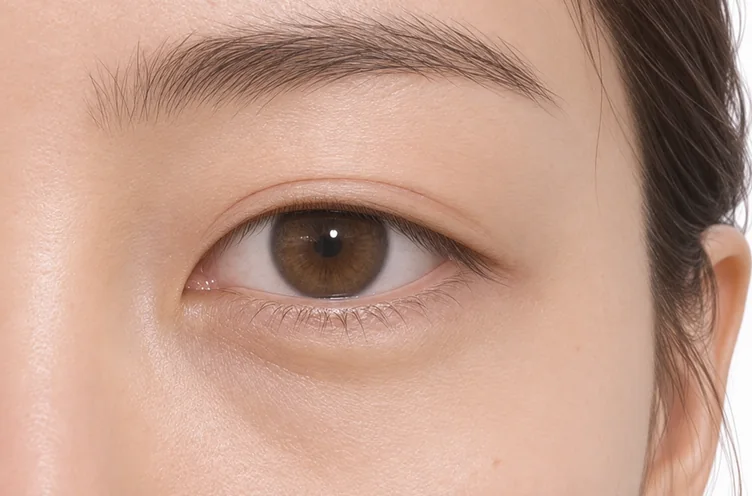
When weakness is pronounced or sagging skin is also present
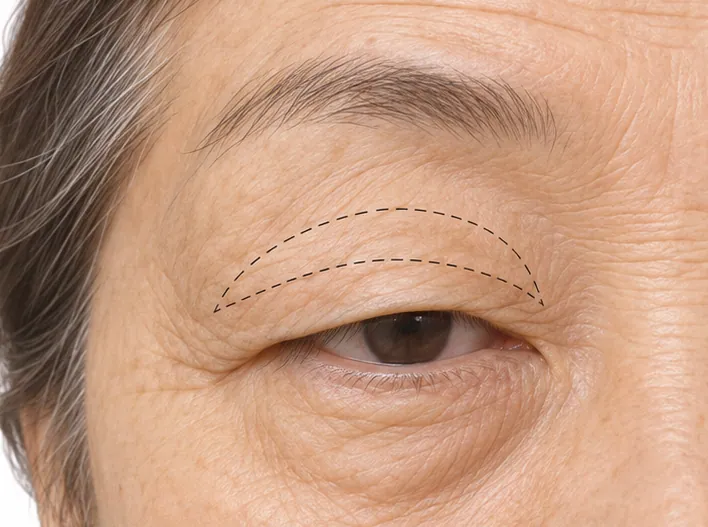
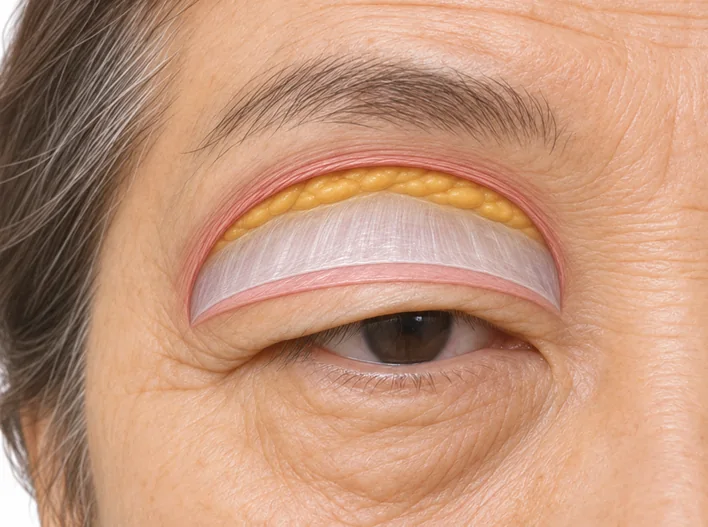
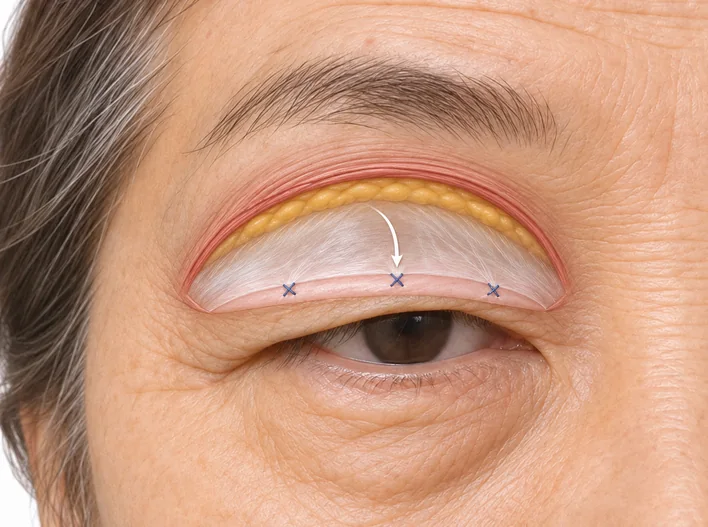
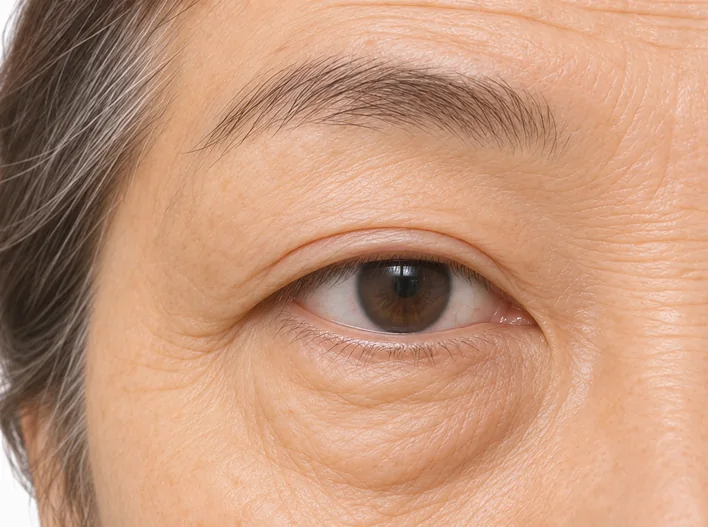
This is a simplified explanation of the typical steps. The actual technique and extent of treatment are determined after an examination.
Key point These are typical procedural approaches, but the actual approach and extent of surgery are determined after an examination.
What limitations and risks should you be aware of after surgery?
06We Explain the Limitations and Risks Along With the Possible Changes
Answer Ptosis correction can cause more swelling and bruising than surgery that only creates an eyelid crease. Dry eyes and incomplete eyelid closure may also occur after surgery because more eyelid tissue is involved.
Ptosis repair involves more eyelid tissue, so it causes more swelling and bruising than surgery that only creates a crease. When true ptosis is present, both eyelid-opening strength and appearance may change, but dry eyes and incomplete eyelid closure can occur after surgery. Dryness may last 1–2 months, but usually improves with artificial tears. If symptoms persist, we reassess based on the course of recovery.
How much eyelid-opening strength is adjusted affects both comfortable eyelid closure and a natural appearance. The key is to determine the range between overcorrection and undercorrection.
Risks discussed during consultation include asymmetry, undercorrection or overcorrection, discomfort when closing the eyes, dryness, changes in the eyelid crease, and swelling. This is not a complete list of possible risks. Risks may vary depending on your health, previous treatments, and the technique and extent of surgery. Surgical results vary from person to person.
If you experience sudden severe pain, decreased vision · An obstructed field of vision, bleeding that does not stop, or rapidly worsening swelling on one side, contact us immediately instead of waiting for your appointment.
Key point The degree of adjustment to eyelid-lifting strength affects both comfortable eyelid closure and a natural appearance, so finding the balance between overcorrection and undercorrection is key.
Here is the answer to the opening question: “My eyes feel heavy when I open them, and I tense my forehead. Do my sleepy-looking eyes mean I have ptosis?” Not all sleepy-looking eyes have ptosis. True ptosis involves actual weakness of the eyelid-lifting muscle, while pseudoptosis occurs when muscle strength is normal but sagging skin covers the iris. That is why we measure MRD1. If it is within the normal range of about 4 mm, we do not perform ptosis surgery. If forehead wrinkles are deep, we first check eyelid-lifting strength before assessing the forehead. The principle is to distinguish the cause through measurements rather than how it feels.
— Dr. Hyungwoo Yim
At your consultation, you can say, “I read your article on ptosis. Please tell me what you would assess first in my case,” and we will walk you through the points in the order covered here.
FAQ
Frequently Asked Questions
Can you diagnose ptosis from photos alone?
Photos serve only as a reference. An in-person examination is needed to assess eyelid movement and function, brow compensation, and other factors.
How much skin is removed?
We take measurements and remove only a minimal amount of skin while preserving the ability to close the eyes properly. Excessive removal can cause incomplete eyelid closure or dryness.
Can I have surgery if I have dry eyes?
In most cases, we proceed if ptosis repair or double eyelid surgery is necessary. Even if dryness develops for 1–2 months after surgery, it usually improves with artificial tears. Before surgery, however, we first assess how severe the dryness is and whether your eyes close completely.
Do I need surgery now, or can it wait?
If there are no functional problems, discomfort is mild, and the changes are stable, observation is an option. We do not recommend rushing into surgery simply because you are getting older. If the eyelid covers the pupil and affects your field of vision, or if pain and functional problems persist, we evaluate them without delay.
BEFORE CONSULTATION
What to Prepare Before Your Consultation
- Front-view photo · Eyes openPlease bring recent photos and, if available, photos taken before the changes appeared. They help us compare when the changes began.
- Records of previous eye surgery · TreatmentsWrite down when, where, and how you were treated, including whether you received filler or fat injections.
- Contact lenses · Eye drops · Daily habitsTell us how long you have worn contact lenses and what type, which eye drops you use, and whether you rub your eyes frequently.
- Discomfort when opening your eyesWrite down what you usually notice, such as whether you tense your forehead, your eyelids feel heavy, or your vision is obstructed.
- The one thing that concerns you mostMake it your first question at your consultation.
More articlesVITAL Plastic Surgery Medical Articles
RESERVATION
You do not need to decide the day of your consultation.
Organize questions about this page without entering your name, contact information, or medical history. This does not submit an appointment request.